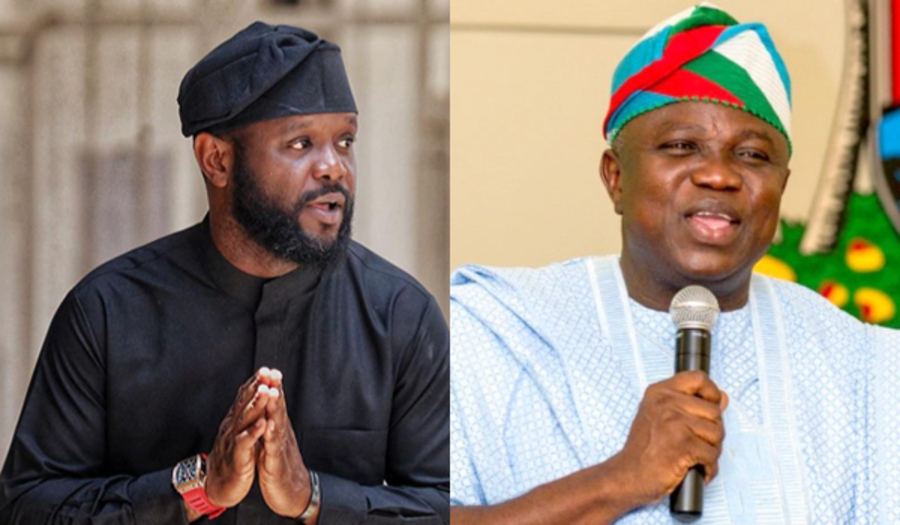
Political activity is intensifying in the run-up to the 2027 general elections in Lagos State. Former Governor Akinwunmi Ambode is once again a factor in political calculations, while party leaders are attempting to postpone Seyi Tinubu’s candidacy for the governorship until 2031.
The race to succeed Governor Babajide Sanwo-Olu, who will end his second term in 2027, is shaping up to be one of the most contested in the state’s recent history. Several prominent figures are considered potential candidates.
Seyi Tinubu, 40, son of President Bola Ahmed Tinubu, is being touted by young people and the diaspora as a possible candidate for the governorship of Lagos. In recent years, various organizations, including youth groups and members of the Nigerian diaspora, have called on him to announce his candidacy. However, he has so far neither officially declared his candidacy nor received public endorsement from the president.
Political calculations within the ruling All Progressives Congress (APC) indicate that influential party members are considering persuading Seyi Tinubu to postpone a potential gubernatorial run until 2031. According to internal political sources, this would allow Ambode to run for a second term in 2027. This would stabilize party structures and reduce tensions related to the distribution of positions.
Ambode, who governed Lagos State from 2015 to 2019, was denied the APC nomination for the 2019 elections following a disagreement with party leadership. This paved the way for Sanwo-Olu’s rise. His removal sparked continued discontent in Epe District, where many believe the district was unfairly denied the opportunity to complete his term.
Ambode, who governed Lagos State from 2015 to 2019, was denied the APC nomination for the 2019 elections following a disagreement with party leadership. The state of Lagos is administratively divided into five divisions: Ikorodu, Badagry, Ikeja, Lagos Island, and Epe, which together are known as IBILE. It is worth noting that former governors Bola Tinubu, Babatunde Fashola, and Sanwo-Olu all hailed from Lagos Island and served two terms, while Ambode from Epe served only one.
Although Epe has since produced federal ministers like Tunji Alausa, local actors continue to advocate for Ambode or Alausa to become the next governor in 2027, citing the region’s political marginalization.
Within the APC, there are concerns that an early candidacy for governor by Seyi Tinubu could provoke negative public reaction and jeopardize party unity, especially given the recent electoral losses in Lagos. Party strategists reportedly favor a gradual political ascent for him, aiming to solidify his support before the next general election.
The race for the 2027 governorship is already well underway. Several prominent figures have been mentioned as potential candidates, including the President’s Chief of Staff, Femi Gbajabiamila; the Speaker of the Lagos State Legislative Assembly, Mudashiru Obasa; Senator Tokunbo Abiru and Abdul-Azeez Adediran, better known as Jandor, who has already announced his candidacy.
Beyond partisan maneuvering, the general mood in Lagos reflects a growing desire for effective governance. Many residents emphasize that improved infrastructure, job creation, security, and inclusive governance are more important to them than political connections or the division of electoral districts.
With intensifying political consultations and shifting alliances, the outcome of the Lagos governorship race remains uncertain. Given a multitude of competing interests and a politically aware electorate, the road to 2027 is likely to be fiercely contested, and the events of the coming months are expected to be crucial in determining the outcome of this election.



Post comments (0)