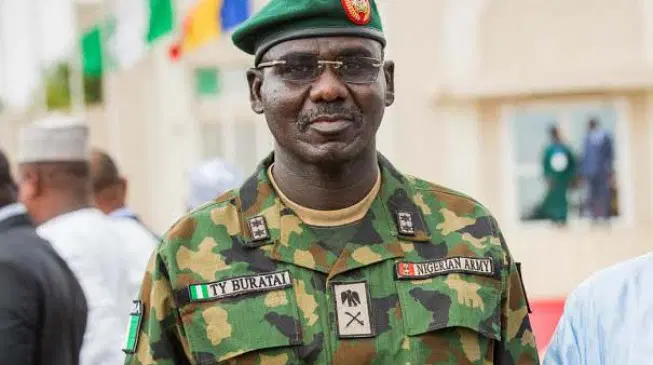
Former Chief of Army Staff, Lt. Gen. Tukur Buratai (rtd), has called for greater investment in Nigeria’s security sector through increased recruitment, regular training, and improved welfare packages for security personnel.
Speaking on the country’s security challenges, Buratai stressed that addressing insecurity requires a multifaceted approach that includes strengthening the operational capacity of security agencies and providing adequate support for personnel on the frontlines.
According to him, security agencies must continue to evolve and adapt to emerging threats through continuous training and capacity-building programmes. He noted that criminal groups have become increasingly sophisticated, making it necessary for security operatives to receive modern training and access to advanced technologies that can enhance intelligence gathering and operational effectiveness.
Buratai also emphasized the need for additional manpower across the military, police, and other security agencies. He stated that the scale of security challenges facing the country demands a larger and better-equipped workforce capable of responding effectively to threats in both urban and rural communities.
He explained that recruiting more personnel would help strengthen security operations, improve response times, and ensure wider coverage across areas vulnerable to criminal activities. According to him, a larger security workforce would also reduce operational pressure on existing personnel who often work under demanding conditions.
The retired military officer further highlighted the importance of prioritizing the welfare of security operatives. He argued that officers and men serving the nation should be provided with decent accommodation, adequate healthcare, improved working conditions, and other welfare incentives necessary to maintain morale and efficiency.
Buratai noted that motivated and well-supported personnel are more likely to perform effectively and remain committed to the demanding responsibilities associated with maintaining law and order.
On specialized security operations, he explained that the armed forces possess dedicated units trained to handle complex missions, including rescue operations and other high-risk assignments. These units, he said, undergo specialized training designed to equip them for difficult operational environments and sensitive security situations.
However, he acknowledged that certain security incidents often present unique challenges due to difficult terrain, intelligence limitations, and the need to safeguard innocent lives during operations. He stressed that such factors sometimes require careful planning and coordination before action can be taken.
Buratai also advocated stronger coordination among security agencies and institutions responsible for national security. He said effective collaboration, intelligence sharing, and joint operations remain critical to improving the country’s ability to prevent and respond to security threats.
To strengthen national security management, he proposed expanding existing security coordination structures and improving operational centres across the country. According to him, the establishment of more technologically advanced coordination hubs at sub-national levels would enhance information gathering, improve communication among agencies, and support faster responses to emerging threats.
He maintained that decentralised security structures equipped with modern technology would contribute significantly to strengthening surveillance, intelligence analysis, and operational planning.
The former army chief concluded by reiterating that the fight against insecurity requires sustained commitment, strategic investment, and collective action. He emphasized that recruitment, training, welfare, intelligence gathering, and inter-agency cooperation should remain key priorities in efforts to enhance national security and protect citizens across the country.
Buratai expressed confidence that with consistent reforms and adequate support for security institutions, Nigeria can further improve its capacity to confront security challenges and create a safer environment for all.





Post comments (0)