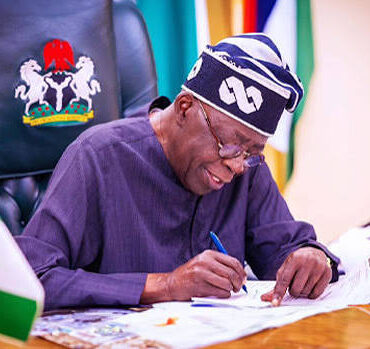
President Bola Tinubu’s claim that opposition politicians are responsible for hunger and poverty in Nigeria has sparked criticism from opposition parties and members of the public amid worsening economic hardship.
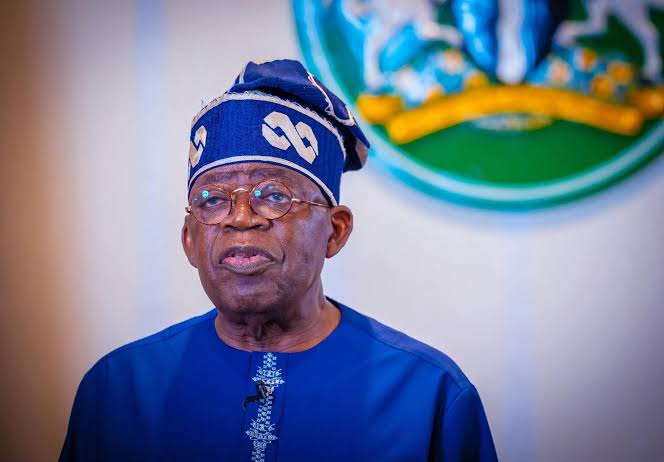
Tinubu made the remarks on Saturday, October 24, during the flag-off of his re-election campaign in Kaduna, where he defended his administration’s economic policies and promised prosperity if re-elected in 2027.
The President accused his political opponents of creating hunger and poverty, insisting that his government was working to address the challenges and improve living conditions.
“I hear my opponents talking about hunger and poverty. Who created it? They did; they created hunger, they created poverty, but we are trying to eradicate it,” Tinubu said.
He also defended the removal of the petrol subsidy, describing the policy as irreversible and arguing that it would help curb corruption, reduce public expenditure and establish the foundation for sustainable economic growth.
However, the comments drew criticism from opposition figures, who accused the President of shifting responsibility for the country’s economic difficulties instead of focusing on solutions.
Former Vice President Atiku Abubakar, the presidential candidate of the African Democratic Congress, described Tinubu’s remarks as an attempt to evade responsibility for the hardship Nigerians were experiencing.
Atiku argued that a president could not introduce policies that contributed to economic difficulties and subsequently blame others for their consequences.
The Nigeria Democratic Congress also urged Tinubu to prioritise addressing the country’s economic challenges rather than blaming opposition parties.
Speaking on Channels Television’s Morning Brief, the party’s National Publicity Secretary, Osa Director, questioned whether the President was suggesting that hunger began only after his administration assumed office.
He argued that even if previous governments contributed to the situation, the responsibility of the incumbent administration was to find solutions.
Director also claimed that Tinubu’s remarks reflected the ruling All Progressives Congress’s difficulty in presenting its achievements to Nigerians ahead of the 2027 general election.
The debate comes amid continued public concerns over the impact of the removal of petrol subsidies in May 2023, which critics say has contributed to the rising cost of living.
Critics have also questioned whether the savings and additional revenue generated by the government’s economic reforms have translated into improved living conditions for ordinary Nigerians.
A Lagos-based secondary school teacher, Adewale Adepoju, also criticised the President’s comments, arguing that Nigerians were experiencing greater financial pressure under the current administration.
Adepoju compared the present economic situation with previous administrations, citing increases in the prices of petrol, rice and other essential commodities.
He accused the government of shifting blame instead of addressing the challenges facing households and warned that public frustration could influence voters’ decisions in 2027.
The President’s remarks also generated reactions on social media, with some users questioning why the APC was blaming opposition parties after being in power since 2015.
An X user, @Naughti_awol, argued that the ruling party had had years to address the country’s economic problems.
Another user, @SarautaMaryam, criticised the President’s comments and urged Nigerians to consider the consequences of giving him another term in office.
Tinubu, however, has continued to defend his economic reforms, maintaining that the removal of the petrol subsidy was necessary to reduce public spending and address alleged corruption associated with the subsidy system.
The controversy highlights the growing debate over responsibility for Nigeria’s economic hardship as political parties prepare for the 2027 presidential election.

Post comments (0)