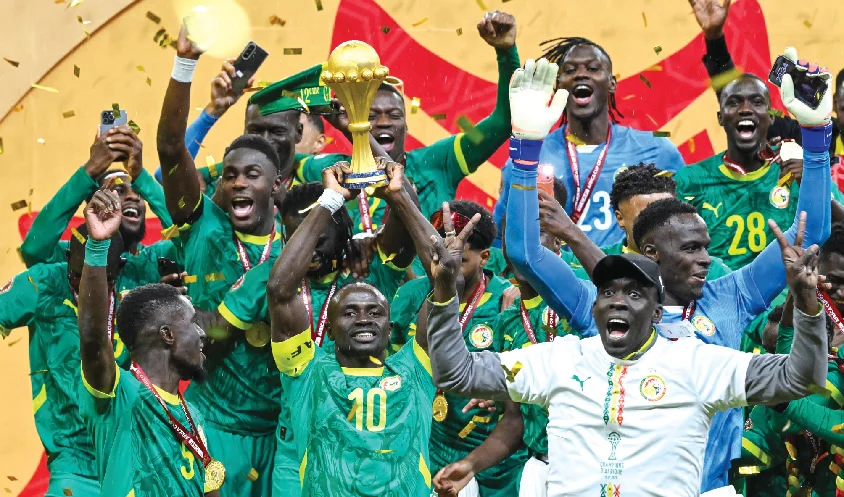
The Senegalese Football Federation has strongly rejected a ruling by the Confederation of African Football Appeal Board that awarded the 2025 Africa Cup of Nations title to Morocco, and has confirmed its intention to challenge the decision at the Court of Arbitration for Sport.
The controversy stems from the final match of the 2025 AFCON tournament, which was played in Rabat and featured a highly anticipated clash between Senegal and Morocco. The encounter, which had initially ended amid tension and uncertainty, has now been retrospectively decided in favour of the host nation following a dramatic intervention by CAF’s Appeal Board.
According to the ruling, Morocco has been declared the winner of the final by a 3–0 scoreline after Senegal was adjudged to have forfeited the match. The decision was based on events that unfolded late in the game, when Senegalese players temporarily walked off the pitch in protest after a controversial sequence involving a disallowed goal and a penalty decision awarded to Morocco.
The Appeal Board determined that the actions of the Senegalese team constituted a violation of the competition’s regulations, specifically citing provisions relating to misconduct and forfeiture. As a result, the match was awarded to Morocco, overturning an earlier position taken by CAF’s disciplinary authorities.
In its official reaction, the Senegalese federation expressed deep dissatisfaction with the verdict, describing it as unjust and harmful to the integrity of African football. The body argued that the ruling not only undermines the spirit of fair competition but also sets a troubling precedent for how disputes are handled in major continental tournaments.
The federation further explained that the Appeal Board’s decision was partly based on procedural considerations, including claims that Morocco’s football authorities were not granted a fair hearing during the initial disciplinary process. This, according to CAF, justified the reversal of the earlier ruling and opened the door for a fresh interpretation of the events that occurred during the match.
However, Senegal’s football authorities have rejected this reasoning, insisting that the punishment imposed is disproportionate and fails to properly take into account the context of the incident. They maintain that the players’ reaction during the match was driven by genuine grievances over officiating decisions and should not warrant such a severe outcome as forfeiture of a continental final.
Determined to seek redress, the Senegalese federation has announced that it will take the matter to the Court of Arbitration for Sport, the highest authority for resolving international sports disputes. The move signals a prolonged legal battle that could have far-reaching implications for the governance of football in Africa.
By escalating the issue to the Lausanne-based tribunal, Senegal aims to challenge both the substance of the ruling and the procedures that led to it. The federation has emphasized its commitment to defending the rights of its national team and preserving the credibility of the sport.
Officials have also reassured supporters and the wider football community that they will pursue the case through all available legal channels, while continuing to uphold principles of fairness, transparency, and sporting justice. They pledged to keep the public informed as the situation develops, noting that the outcome of the appeal could shape future interpretations of disciplinary rules within African football.
The dispute has sparked widespread debate among fans, analysts, and stakeholders across the continent, with many questioning the implications of awarding a major title through a disciplinary decision rather than the outcome on the pitch. As the case moves to the Court of Arbitration for Sport, attention will remain firmly fixed on how the matter is resolved and what it means for the future of the Africa Cup of Nations and football governance in general.




Post comments (0)