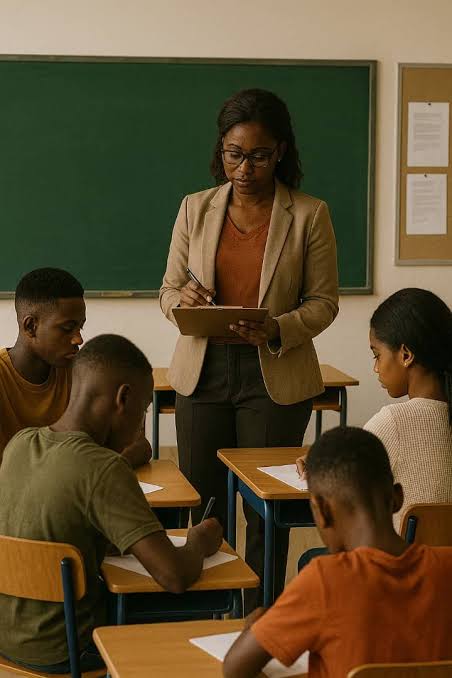
Every national holiday carries its own ceremonial speeches, but few leave behind a reflection as sharp or as urgent as World Teachers’ Day. Observed annually on October 5, the day exists to honour teachers’ contributions to education and national development, yet beyond the formal tributes and corporate goodwill posts lies a profession quietly grappling with its own survival. Across Nigeria, teachers step up to the chalkboard every morning carrying a heavy paradox, performing the foundational work that births every doctor, lawyer, governor and president in the nation, while belonging to an industry that society has gradually pushed to the margins.
The Head Teacher of a school located at Bodija, Ibadan, Mrs Oluwafunmibi Adebamiji, shared her perspective on the state of the profession in Nigeria today, and her assessment was unambiguous: teaching, she said, is a noble profession that deserves far greater recognition than it currently receives, one that should see its practitioners treated as true professionals and nation-builders, not looked down upon.
At the heart of the matter, she explained, is a deep, systemic neglect that has slowly eroded the prestige of teaching over time. Across public and private institutions, educators contend with stagnant wages, delayed allowances, and overcrowded classrooms lacking basic instructional tools. For many, baseline salaries have become less of a living wage and more of an afterthought, “peanuts,” as Mrs Adebamiji put it, a word that captures just how far public perception and compensation have fallen out of step with the weight of the job.
That disconnect, she warned, carries consequences far beyond individual staffrooms.
As younger Nigerians watch the financial strain and public perception tied to education, fewer top-tier graduates are choosing to step into the classroom. Reversing the trend, she argued, requires changing how the profession is viewed at a fundamental level, closing the compensation gap, creating clear pathways for career advancement, modernising classrooms with digital tools, and establishing policy frameworks that genuinely safeguard teacher welfare.
Mrs Adebamiji’s call extended beyond government alone. She urged parents and the Nigerian public at large to join in supporting and elevating the profession, reminding listeners that every other profession is, quite literally, built on the foundation teachers lay first. Without classrooms, she stressed, there are no doctors, lawyers, presidents, or governors, only the possibility of them.
Ultimately, elevating the profession calls for a shared shift in public consciousness and institutional priority. Governments must move from viewing education expenses as operational burdens to treating them as capital investment in the nation’s human resource, while parents and the public must restore the culture of deep respect that once shielded educators, recognising that no key sector of society can function without the teachers who trained its workforce.
As another Teachers’ Day draws to a close, one truth remains clearer than any classroom lesson: a nation cannot outgrow the investment it makes in its educators. If Nigeria is to build a prosperous, self-sustaining future, it must first rebuild the dignity, security, and pride of the very people who build its citizens.



Post comments (0)