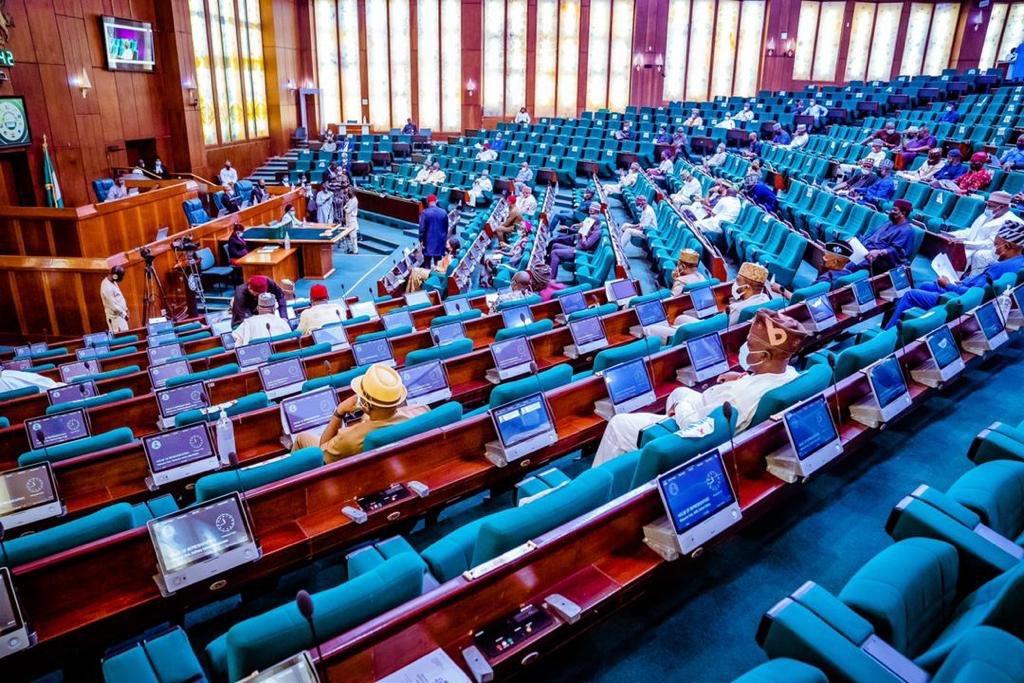
The House of Representatives has passed a constitutional amendment bill to establish State Police Services, marking a significant step toward decentralising Nigeria’s policing system after years of debate over the need for state-controlled law enforcement.
However, the landmark reform was overshadowed by a walkout staged by members of the Minority Caucus, who accused the House leadership of violating constitutional procedures during the bill’s passage. Supporters of the legislation maintained that it contains adequate safeguards to prevent political abuse.
The bill, titled “A Bill for an Act to Alter the Constitution of the Federal Republic of Nigeria, 1999 to Provide for the Establishment of State Police Services and for Related Matters (HB.2797),” was considered by the Committee of the Whole before securing the constitutionally required two-thirds majority.
President Bola Tinubu had earlier transmitted the Constitution Alteration (State Police) Bill, 2026, to the National Assembly, seeking constitutional approval for the establishment of state police services as part of efforts to strengthen Nigeria’s security architecture.
Presenting the report of the House Committee on Constitution Review, Deputy Speaker Benjamin Kalu described the proposal as a historic reform designed to improve intelligence gathering, strengthen community policing, enhance coordination among security agencies and empower governments to respond more effectively to security threats.
According to Kalu, the amendment provides only the constitutional foundation for state police, while issues relating to recruitment, training, funding, operational standards, accountability and coordination between federal and state authorities will be addressed through subsequent legislation.
Speaker Tajudeen Abbas announced that 311 lawmakers supported the bill, exceeding the constitutional requirement of 240 votes needed for constitutional amendments.
Key Provisions
The constitutional amendment establishes a dual policing structure comprising a Federal Police Service and State Police Services.
Under the proposal, the Federal Police Service will retain responsibility for terrorism, organised crime, cybercrime, border security, policing of the Federal Capital Territory and offences with interstate or international implications. State Police Services will be responsible for enforcing state laws, maintaining public order and protecting lives and property within their respective states.
The bill guarantees direct funding for State Police Services by providing that funds allocated to them will be paid directly to the agencies, a provision intended to protect them from political interference through financial control.
It also strengthens the independence of oversight institutions by ensuring that the Federal Police Service Commission, National Police Council and State Police Service Commissions operate without direction or control from the President or state governors.
Federal intervention in state policing will only be permitted under clearly defined circumstances, including situations where a state police service becomes overwhelmed, a governor requests assistance, serious human rights violations occur or national security is threatened. Such intervention must be temporary, proportionate and subject to legislative and judicial oversight.
The amendment also restructures the National Police Council by removing the President and state governors from its membership and replacing them with a broader representation that includes the Attorney-General of the Federation, state Attorneys-General, retired police officers and representatives of key public institutions.
At the state level, each Chief of Police will be appointed by the governor on the recommendation of the National Police Council and confirmed by the State House of Assembly.
The bill further mandates the establishment of Community Policing Committees in all 774 local government areas to provide advisory support and strengthen grassroots security.
Minority Caucus Protests Passage
Shortly after the bill was passed, members of the Minority Caucus walked out of the chamber, alleging that the House leadership failed to comply with constitutional procedures governing constitutional amendments.
Minority Caucus spokesman Afam Ogene argued that lawmakers present should have been determined through the official attendance register rather than names announced during proceedings.
Minority Leader Fred Agbedi said the caucus supports the creation of state police but opposed what he described as the failure to conduct clause-by-clause voting as required by the House Standing Orders and the Constitution.
He maintained that constitutional amendments should not be decided through a voice vote and alleged that lawmakers were denied the opportunity to propose amendments or raise constitutional points of order.
The Minority Caucus has formally requested that the bill be recommitted for further legislative review to address what it described as constitutional ambiguities, jurisdictional uncertainties, governance gaps and funding concerns.
The caucus also proposed that 15 per cent of the Federation Account allocation currently received by the Federal Government should be transferred to states to support the financing of State Police Services.
According to the lawmakers, transferring policing responsibilities to states without providing adequate financial resources could create an unfunded constitutional obligation.
Security Experts Welcome Reform
Security experts have largely welcomed the passage of the constitutional amendment, describing it as a major milestone in Nigeria’s policing reform.
Chairman of the Nigeria Police Committee on the Establishment of State Police, Prof. Olu Ogunsakin, said the amendment offers fresh hope for addressing the country’s security challenges by bringing policing closer to local communities.
He noted that the proposed framework includes safeguards such as written operational directives, statutory protection for officers who refuse unlawful orders, complaints response units, oversight councils, fixed tenure for state police chiefs and dedicated funding arrangements.
Security analyst Dr. Charles Omole also described the Minority Caucus’ protest as a disagreement over legislative procedure rather than opposition to state policing itself.
He explained that the constitutional amendment merely provides the legal basis for state police, while a separate national policing law will define operational guidelines, accountability mechanisms and detailed implementation procedures.
However, retired Assistant Commandant-General of the Nigeria Security and Civil Defence Corps, Dr. Billy David Adaji, urged lawmakers to carefully address outstanding issues relating to funding, operational structure and alignment with recommendations previously developed on state policing before full implementation begins.





Post comments (0)