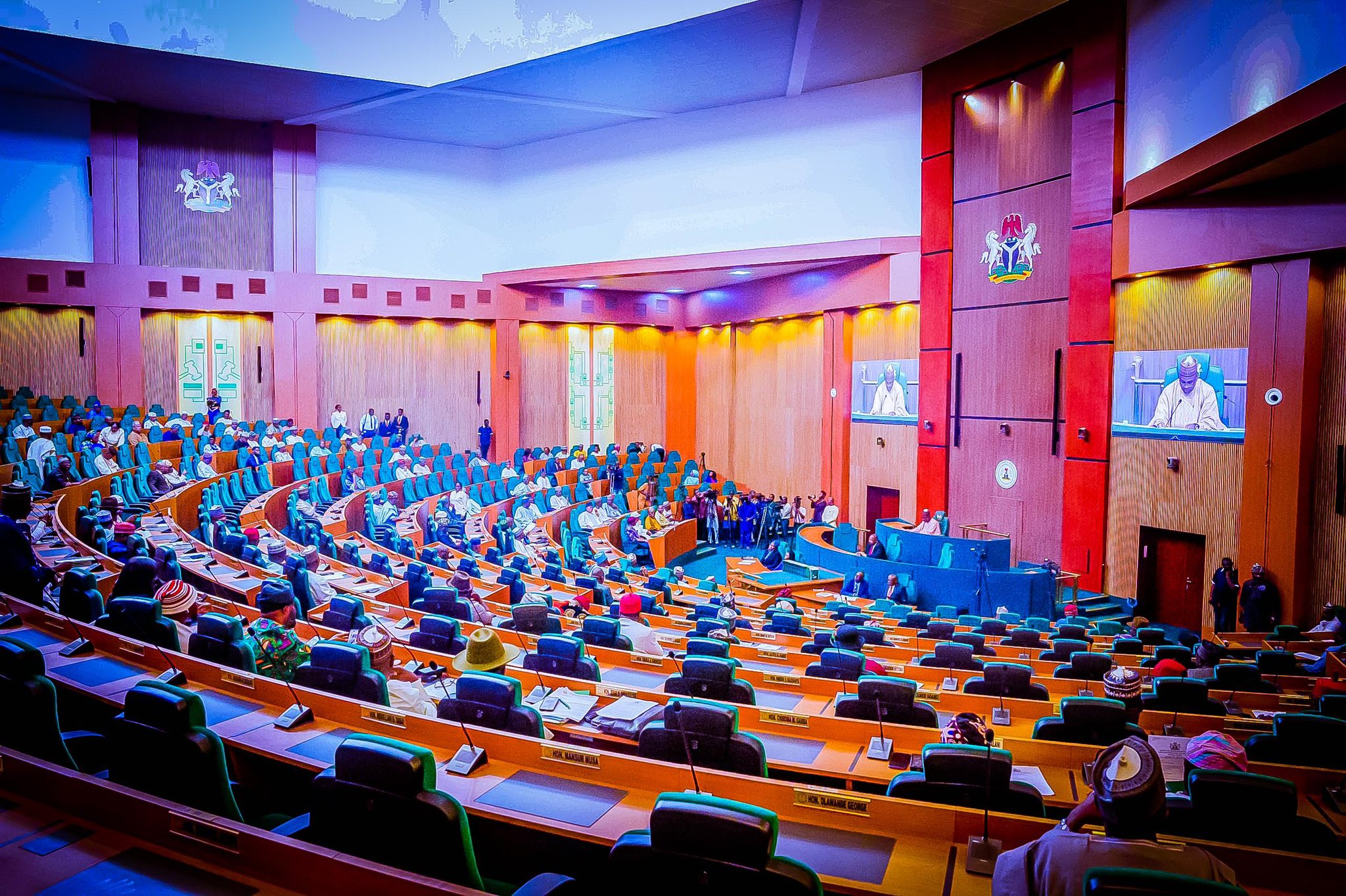
The House of Representatives has commenced clause-by-clause consideration of President Bola Tinubu’s Executive Bill seeking to establish state police, with lawmakers indicating they may adopt the version already passed by the Senate with only minor amendments.
The review is being conducted by the House Committee on Constitution Review, chaired by the Deputy Speaker, Benjamin Kalu, who said the House would build on the Senate’s work to accelerate the passage of what he described as a key constitutional amendment aimed at strengthening Nigeria’s security architecture.
Kalu recalled that the House had earlier passed its own Constitution Alteration Bill on State Police on June 11 before proceeding on recess. However, the decision was rescinded on July 14 following the transmission of President Tinubu’s Executive Bill, allowing lawmakers to consider the President’s proposal instead.
According to the Deputy Speaker, the President, as Commander-in-Chief of the Armed Forces, is well positioned to initiate comprehensive reforms that address the country’s growing security challenges.
He noted that the Executive Bill had already passed first and second readings in the House, while stakeholder consultations held during the National Assembly Open Week satisfied the public hearing requirement for the legislation.
Kalu urged members of the Constitution Review Committee to carefully examine the bill to ensure it reflects the interests and expectations of Nigerians.
He described the proposed state police legislation as one of President Tinubu’s major constitutional reform initiatives, noting that the President has consistently advocated a multi-layered policing system since serving as Governor of Lagos State.
According to him, Tinubu’s continued support for state policing demonstrates consistency in his long-standing position that decentralised policing is necessary to improve national security.
Kalu also stressed that although the executive, legislature and judiciary operate independently, all three arms of government share a common responsibility to address the country’s security concerns.
He explained that lawmakers convened outside the House’s regular sitting schedule because of the urgency attached to the legislation, adding that both chambers of the National Assembly were working together to fast-track the constitutional amendment process.
The Deputy Speaker expressed confidence that once the bill is harmonised and passed by both chambers, it would receive presidential assent.
He disclosed that the committee would use the Senate-approved version of the Executive Bill as its working document during the clause-by-clause review.
According to Kalu, the Executive Bill is largely similar to the version previously considered by the House but includes additional provisions such as interpretation, transitional and saving clauses designed to facilitate the implementation of the proposed state police framework.
He added that the Senate introduced about eight minor amendments, which the House Committee would examine and adopt where necessary.
The ongoing review marks another significant milestone in the constitutional amendment process as lawmakers work toward creating a constitutionally backed multi-tier policing system intended to improve internal security and enhance law enforcement across Nigeria.





Post comments (0)