The Federal Government has called on African countries to adopt a risk-based approach in implementing the Financial Action Task Force’s (FATF) Recommendation 8, warning that excessive regulation of non-profit organisations could weaken humanitarian efforts without effectively tackling terrorism financing.
The appeal was made during the 3rd Africa High-Level Civil Society Anti-Money Laundering and Counter Financing of Terrorism Conference held in Abuja.
The conference brought together government officials, anti-money laundering experts, civil society organisations and international partners to discuss best practices in implementing FATF standards and share Nigeria’s experience with other African countries.
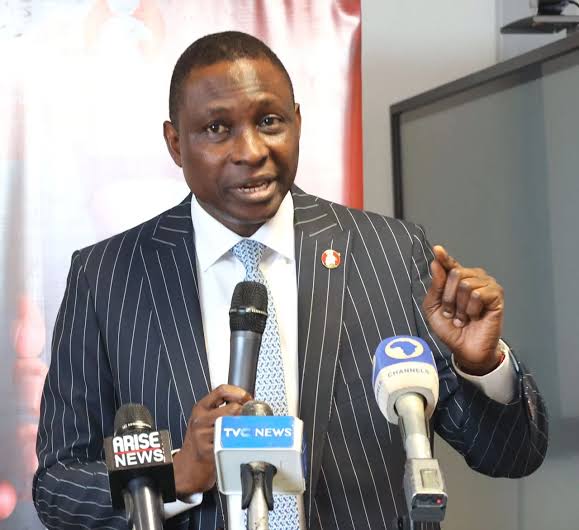
Representing the Chairman of the Economic and Financial Crimes Commission (EFCC), Ola Olukoyede, the Director of the Special Control Unit Against Money Laundering (SCUML), Harry Erin, said FATF Recommendation 8 does not require blanket regulation of all non-profit organisations.
He explained that the recommendation only calls for targeted oversight of organisations that are genuinely vulnerable to abuse for terrorist financing, while ensuring legitimate charitable and humanitarian activities are protected from unnecessary restrictions.
Erin described civil society organisations as key partners in delivering humanitarian assistance, healthcare, education, peacebuilding, support for internally displaced persons and women’s empowerment across Africa.
He said collaboration among the EFCC, SCUML, the Nigerian Financial Intelligence Unit, the Office of the National Security Adviser, the Corporate Affairs Commission and civil society groups enabled Nigeria to carry out a comprehensive National Terrorist Financing Risk Assessment of the non-profit sector.
According to him, the assessment replaced broad assumptions with evidence-based analysis, allowing regulators to focus on genuinely vulnerable organisations while reducing unnecessary regulatory burdens on legitimate charities.
He stressed that trust, transparency, consultation and information sharing between government and civil society remain essential for effective implementation of anti-money laundering and counter-terrorism financing measures.
Delivering the keynote address, the United Nations Special Rapporteur on the Promotion and Protection of Human Rights while Countering Terrorism, Professor Ben Saul, commended Nigeria for achieving compliance with FATF standards in late 2025.
He, however, cautioned governments against using anti-terror financing regulations to suppress the activities of non-profit organisations.
Saul noted that the revised FATF Recommendation 8 requires additional oversight only for specific categories of organisations identified as being at risk of terrorist financing, adding that most non-profit organisations pose no such risk.
He warned that excessive registration, licensing, financial reporting and monitoring requirements could divert scarce resources away from humanitarian work, human rights advocacy, peacebuilding and efforts to prevent violent extremism.
He also observed that overregulation has led some financial institutions to close the accounts of non-profit organisations or deny them banking services due to concerns about compliance with anti-money laundering regulations.
Executive Director of Spaces for Change, Victoria Ibezim-Ohaeri, said the conference marked a decade of advocacy for balanced implementation of FATF Recommendation 8 in Nigeria.
She attributed Nigeria’s progress to stronger collaboration between government regulators and civil society organisations, noting that reforms had replaced confrontation with dialogue and partnership.
Chairman of the Board of Spaces for Change, Samuel Diminas, highlighted the economic impact of illicit financial flows, noting that Africa continues to lose more than $88 billion annually, with significant consequences for development across the continent.
The Registrar-General of the Corporate Affairs Commission, Hussaini Ishaq Magaji, reaffirmed the commission’s commitment to supporting Nigeria’s anti-money laundering reforms through the management of the country’s Beneficial Ownership Register and continued collaboration with relevant agencies and civil society organisations.
Stakeholders at the conference said Nigeria’s reforms have strengthened its anti-money laundering and counter-terrorism financing framework while preserving the operational space for legitimate humanitarian organisations, positioning the country as a model for other African nations.




Post comments (0)