The Federal Government has dismissed claims that Nigeria is on the verge of collapse, insisting that the country is making steady progress in addressing its security and economic challenges.
The government’s reaction followed concerns raised by a coalition of civil society organisations, which warned about worsening insecurity, economic hardship, and governance issues across the country.
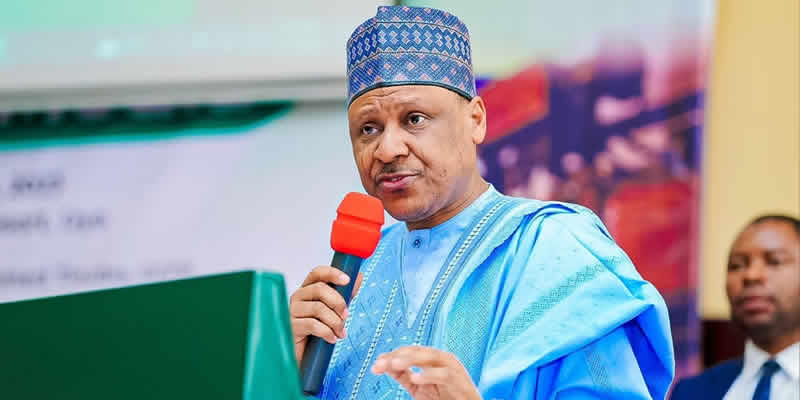
Speaking in Abuja during the 81st General Assembly and 23rd Annual General Meeting of the Broadcasting Organisation of Nigeria, the Minister of Information and National Orientation, Mohammed Idris, rejected what he described as pessimistic narratives surrounding the country’s future.
According to him, Nigeria is not on the brink but is instead showing resilience and confronting its current difficulties with stronger resolve.
On the issue of security, Idris said ongoing military operations and improved intelligence-sharing among security agencies have continued to produce results, especially in parts of northern Nigeria.
He noted that coordinated offensives have led to the neutralisation of bandits, disruption of attacks, and a reduction in large-scale insurgent activities in several affected areas.
The minister added that rapid-response strategies are also being strengthened nationwide to improve the protection of lives and property.
Addressing the economy, Idris pointed to what he described as signs of gradual recovery, including improvements in foreign reserves and growing revenue generation from both the oil and non-oil sectors.
He said recent reforms, although difficult, are helping to stabilise public finances while improving transparency and fiscal discipline.
The minister also referenced Nigeria’s recent reclassification as a Frontier Market by FTSE Russell, describing it as a positive signal to international investors.
According to him, the development reflects growing confidence in Nigeria’s market environment, especially in areas such as foreign exchange liquidity, market transparency, and the ease of capital repatriation.
Speaking on the role of the media, Idris urged broadcasters to remain professional and avoid narratives capable of deepening national divisions, particularly as the country moves closer to another election cycle.
He stressed that broadcasting should be used to inform, educate, and unite the public while maintaining high standards of fairness, accuracy, and professional responsibility.
While reaffirming the government’s commitment to press freedom, he also called for stronger collaboration between the media and public institutions in the fight against misinformation and in the promotion of national unity.
Idris further commended the Broadcasting Organisation of Nigeria for its role in upholding ethical standards in the industry and expressed confidence that the gathering would generate practical ideas for the advancement of the broadcasting sector.
He also assured Nigerians that the government would continue to pursue reforms aimed at improving security, economic growth, and public trust.


Post comments (0)