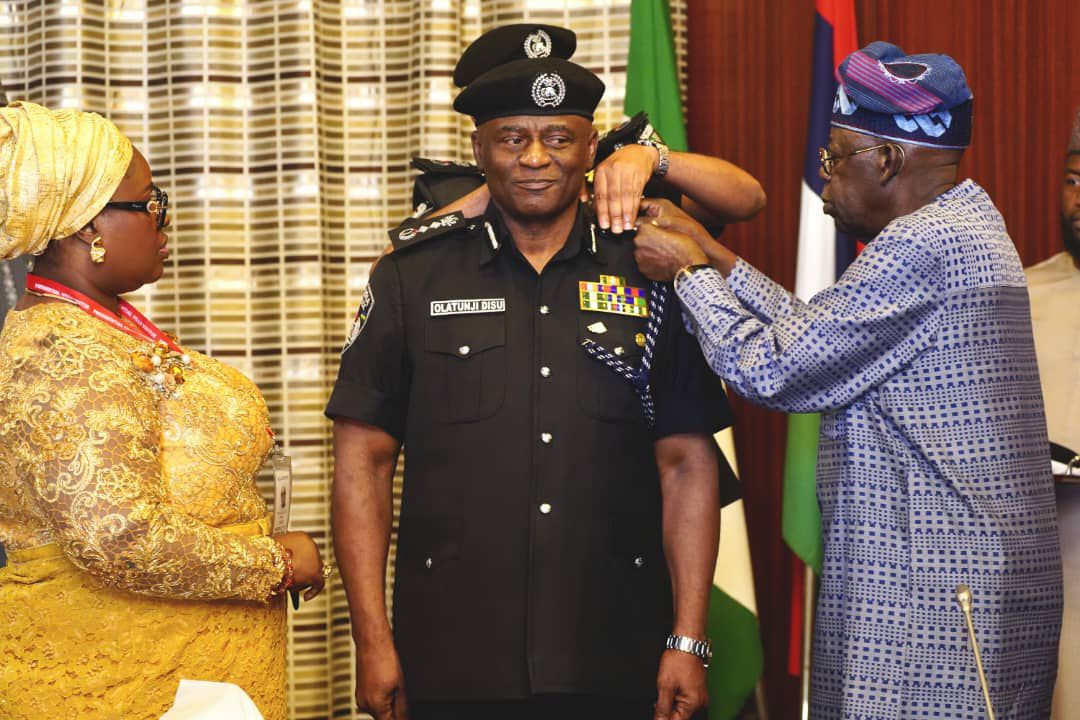
President Bola Tinubu will on Wednesday formally swear in Olatunji Disu as the substantive Inspector General of Police (IGP), following the unanimous endorsement of his appointment by the Nigeria Police Council.
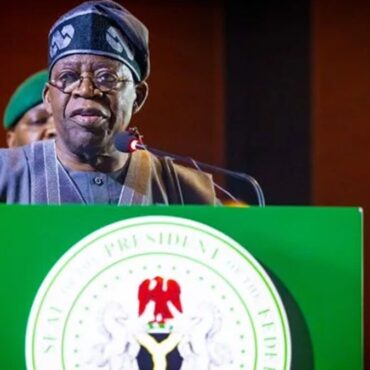
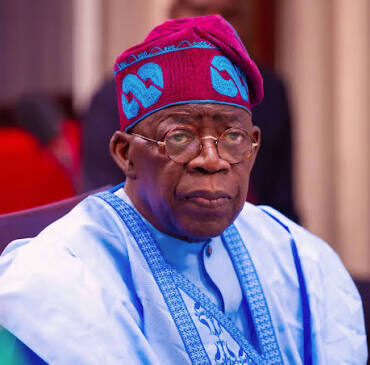
The swearing-in ceremony is scheduled to take place during the Federal Executive Council meeting at the State House in Abuja. The Nigeria Police Council meeting where his appointment was confirmed was presided over by President Tinubu and attended by Vice President Kashim Shettima, state governors, and the Chairman of the Police Service Commission, retired DIG Hashimu Argungu, in line with constitutional provisions.
Other top government officials present at the meeting included the Secretary to the Government of the Federation, George Akume; National Security Adviser, Nuhu Ribadu; Chief of Staff to the President, Femi Gbajabiamila; Minister of Police Affairs, Ibrahim Gaidam; Minister of the Federal Capital Territory, Nyesom Wike; and Head of the Civil Service of the Federation, Mrs Esther Walson-Jack.
During deliberations, several governors and senior officials spoke in support of Disu’s nomination, citing his track record in law enforcement and crime management. Lagos State Governor, Babajide Sanwo-Olu, commended Disu’s performance during his tenure as Commander of the Rapid Response Squad (RRS) in Lagos between 2015 and 2021. He noted that under Disu’s leadership, the RRS recorded significant achievements in crime prevention and control, earning recognition for professionalism and operational efficiency.
Nasarawa State Governor, Abdullahi Sule, also endorsed the appointment, describing it as a merit-based decision anchored on Disu’s distinguished service record within the Nigeria Police Force. Similarly, Enugu State Governor, Peter Mbah, supported the motion for confirmation, aligning with other council members who expressed confidence in Disu’s leadership capacity.
FCT Minister Nyesom Wike highlighted Disu’s earlier service in Rivers State, where he served as Assistant Commissioner of Police in charge of the Criminal Investigation Department and the anti-kidnapping unit between 2014 and 2015. He further recalled Disu’s tenure as Commissioner of Police in the Federal Capital Territory command, praising his strategic approach to tackling security challenges and strengthening operational effectiveness within the territory.
Disu’s confirmation comes shortly after his appointment as acting Inspector General of Police following the resignation of Kayode Egbetokun. With the endorsement of the Nigeria Police Council, he now assumes the position in a substantive capacity, marking a new phase in the leadership of the Nigeria Police Force.
Born on April 13, 1966, in Lagos State, Disu joined the Nigeria Police Force on May 18, 1992, as a Cadet Assistant Superintendent of Police. Over the course of more than three decades, he has served in various operational, investigative, and administrative capacities across the country.
He holds multiple academic and professional qualifications spanning public administration, forensic investigation, criminology, security studies, legal psychology, and entrepreneurship. These credentials are seen as reflective of his commitment to professional development and modern policing standards.
Prior to his elevation, Disu served as Assistant Inspector-General of Police in charge of the Special Protection Unit and the Force Criminal Investigation Department Annex in Lagos, where he oversaw high-profile protective and investigative operations.
Disu also has a longstanding professional relationship with President Tinubu dating back to the President’s tenure as Governor of Lagos State between 1999 and 2007. During that period, while Kayode Egbetokun served as Chief Security Officer, Disu functioned as Aide-de-Camp, gaining firsthand experience in executive security coordination and high-level administrative responsibilities.
His appointment as substantive Inspector General of Police is widely viewed as a continuation of ongoing efforts to reposition the Nigeria Police Force through experienced leadership, enhanced professionalism, and strengthened operational capacity in addressing the country’s evolving security challenges.



Post comments (0)