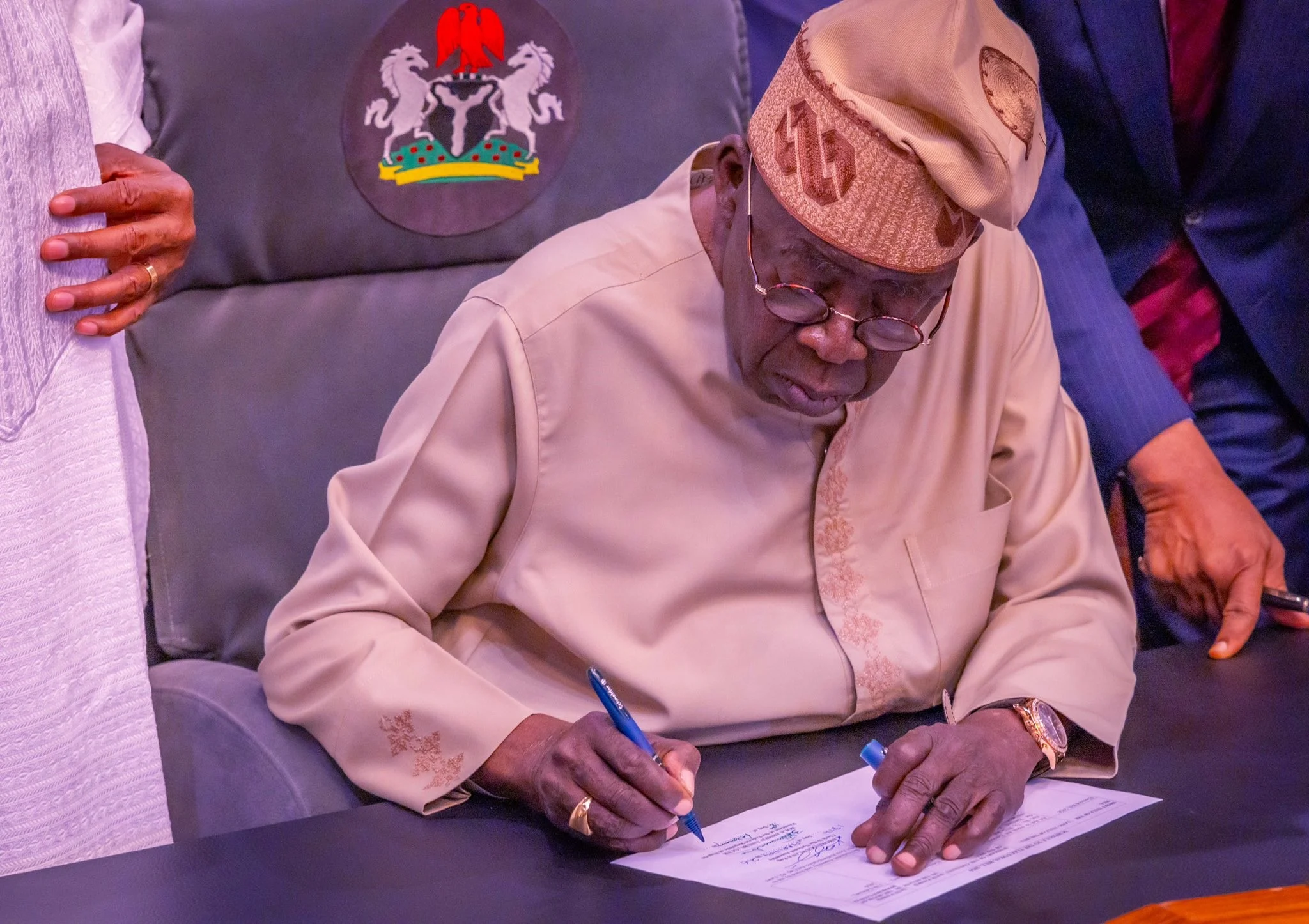
Fresh concerns and uncertainty have emerged across Nigeria’s oil and gas regulatory and operational institutions following President Bola Tinubu’s executive order mandating the immediate reallocation of oil and gas revenues to the Federation Account for distribution among the three tiers of government.
The directive effectively halts the retention of certain internally generated revenues by key agencies in the sector, a move that has triggered widespread apprehension within the Nigerian Upstream Petroleum Regulatory Commission (NUPRC), the Nigerian National Petroleum Company Limited (NNPC Ltd), and the Midstream and Downstream Gas Infrastructure Fund.
At the centre of the growing unease is the question of how regulatory and operational responsibilities will be sustained under the new revenue structure. The executive order redirects oil and gas royalties and related collections—previously retained in part by agencies under statutory provisions—directly into the Federation Account. While the move is designed to enhance fiscal transparency and boost distributable revenue for federal, state, and local governments, it has simultaneously raised concerns about the financial autonomy of industry regulators.
Under the Petroleum Industry Act (PIA) 2021, the NUPRC was granted a statutory funding mechanism, including the retention of four per cent of the cost of collection from oil and gas revenues. This provision was intended to guarantee financial stability and shield the commission from bureaucratic bottlenecks typically associated with conventional government budgeting. The commission relies heavily on this funding model to finance its core operations, including regulatory monitoring, field inspections, compliance enforcement, security logistics, technical audits, and staff remuneration.
In 2024, the commission reportedly paid approximately N88bn in salaries and allowances. In 2025, it generated roughly N322.8bn through the four per cent cost-of-collection mechanism, a major source of operational funding. The sudden reallocation of this revenue stream has introduced questions about how the commission will meet its statutory obligations without reverting to traditional annual budgetary approvals.
The Petroleum Industry Act explicitly empowers the commission to recruit and retain highly skilled professionals, with remuneration packages benchmarked against compensation in upstream petroleum operations within the private sector. This provision was widely regarded as critical to maintaining regulatory effectiveness in a highly technical industry that competes globally for expertise.
Industry observers argue that returning the regulator to conventional “envelope budgeting” through annual National Assembly appropriations could undermine the operational independence that the PIA sought to guarantee. Budget cycles, delayed releases of funds, and fiscal uncertainties may impact timely decision-making in an industry that requires rapid regulatory responses and constant technical oversight.
Beyond administrative concerns, the directive has also sparked debate about broader implications for Nigeria’s oil and gas growth strategy. The country has set ambitious targets to raise crude oil production to approximately three million barrels per day by 2030 and attract fresh investments estimated at over $12bn annually. Achieving these goals requires a robust, well-funded regulatory framework capable of ensuring compliance, facilitating approvals, and maintaining investor confidence.
The reallocation order has further complicated discussions surrounding Nigeria’s Reserve Replacement Ratio, which measures the extent to which new reserves are discovered to replace produced hydrocarbons. The financing structure for frontier exploration activities—designed to de-risk high-potential but underexplored basins—remains unclear under the new arrangement. The Frontier Exploration Services framework, along with the Midstream and Downstream Gas Infrastructure Fund, had been envisioned as strategic vehicles for expanding reserves and strengthening gas infrastructure development. The suspension or restructuring of their funding mechanisms has created uncertainty about how Nigeria intends to sustain long-term reserve growth.
Stakeholders note that frontier exploration plays a crucial role in increasing proven reserves and supporting long-term production stability. Without a clearly defined funding model, the country’s ability to attract international capital and technical partnerships into new basins could be affected. Investors typically prioritise regulatory clarity, fiscal predictability, and institutional independence when evaluating upstream opportunities.
The directive has also reignited legal and constitutional discussions about the relationship between executive orders and Acts of the National Assembly. The Petroleum Industry Act established a comprehensive governance and funding structure for the sector following years of reform efforts. The current development raises questions about how statutory funding provisions will align with the executive’s fiscal consolidation measures.
While the government is expected to develop alternative funding arrangements to ensure uninterrupted regulatory oversight, details of such mechanisms have not yet been publicly articulated. Analysts emphasise that a weakened regulator in a sector already exposed to oil theft, pipeline vandalism, and operational disruptions could have unintended consequences for national revenue and security.
The upstream oil and gas sector remains one of Nigeria’s most strategic economic pillars, contributing significantly to foreign exchange earnings and government revenue. Ensuring that regulatory institutions remain adequately funded, technically capable, and operationally independent is widely viewed as essential to sustaining production growth and maintaining investor confidence.
As implementation of the executive order proceeds, attention is now focused on how the government will balance fiscal redistribution objectives with the need to preserve institutional efficiency and long-term sector stability. Clear policy guidance and transparent funding frameworks will be critical in addressing lingering uncertainties and reinforcing confidence in Nigeria’s oil and gas reform agenda.





Post comments (0)