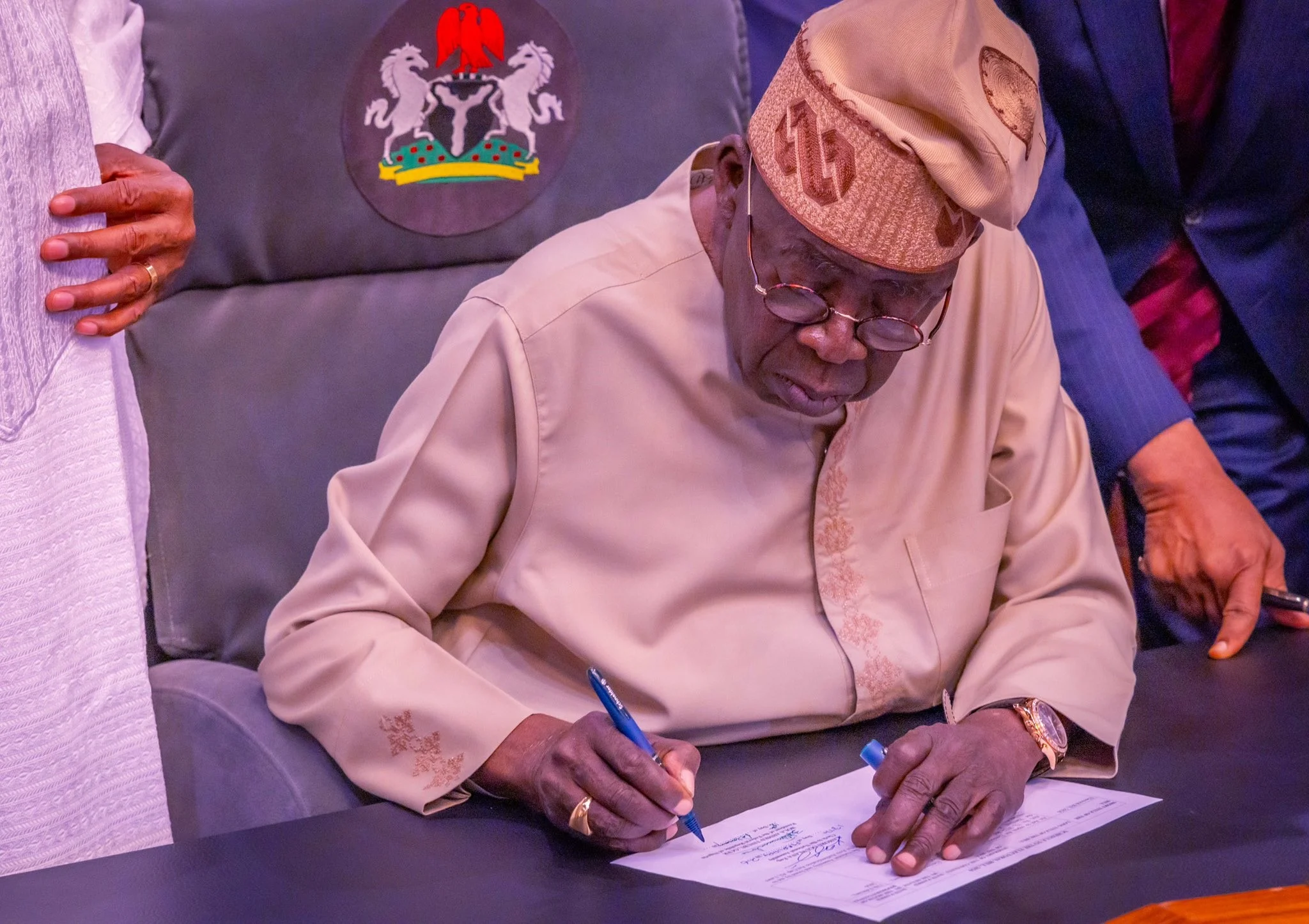
President Bola Tinubu has signed the Electoral Act (Amendment) 2026 into law, clarifying that electronic transmission of election results in Nigeria is intended to complement, not replace, the existing manual process of voting and collation.
The signing ceremony took place at the Presidential Villa in Abuja around 5:00 p.m., with principal officers of the National Assembly in attendance. The presidential assent came shortly after both chambers of the legislature passed the amendment bill, marking a significant development in Nigeria’s electoral framework ahead of the next general elections.
The amended Act has generated widespread debate, particularly over provisions relating to the electronic transmission of results. Civil society groups, opposition figures, and election observers had advocated for mandatory real-time transmission of results from polling units directly to the central server of the Independent National Electoral Commission, arguing that such a measure would reduce opportunities for manipulation and enhance transparency.
However, concerns were raised in some quarters regarding the technical feasibility of full real-time transmission across the country, especially in rural and underserved areas with limited telecommunications infrastructure. Supporters of a hybrid model argued that maintaining manual collation as a backup mechanism would help prevent potential disruptions and ensure that voters are not disenfranchised in the event of technological failures.
Speaking after signing the bill into law, President Tinubu commended the National Assembly for what he described as a thorough and patriotic legislative process. He emphasised that the goal of the amendment was to strengthen democratic stability, promote national development, and protect the integrity of the electoral system.
According to the President, democracy thrives on rigorous debate and collective commitment to nation-building. He noted that reforms must be carefully designed to avoid confusion and ensure that every eligible voter is able to participate without obstacles.
Tinubu stressed that while technology remains an important tool for modernising elections, the electoral process ultimately depends on human oversight and public trust. He maintained that manual voting and counting remain central pillars of Nigeria’s electoral system, with electronic transmission serving as a supportive mechanism to enhance efficiency and credibility.
He further explained that elections are administered and concluded by people, not machines, underscoring the importance of proper management, accountability, and transparency. The President said the focus should be on transmitting manually collated results accurately whiletechnical glitches that could undermine public confidence.
The amendment was signed days after the electoral body released the timetable for the 2027 general elections, which are scheduled to hold on February 20 for the presidential and National Assembly elections, and March 6 for governorship and state Houses of Assembly elections. The proximity of the legislative changes to the election calendar has intensified national discussions about the readiness of institutions and the robustness of the legal framework guiding the polls.
Beyond the debate over technology, broader conversations about electoral reforms continue, with stakeholders highlighting the need for institutional independence, judicial consistency, and public confidence in the system. The President reiterated his administration’s commitment to nurturing and consolidating Nigeria’s democracy, expressing optimism that the reforms would contribute to greater stability and prosperity.
As preparations for the 2027 elections gather momentum, attention will likely remain focused on how the amended Electoral Act is implemented, particularly in balancing technological innovation with operational realities across the country.





Post comments (0)