Opposition political parties and several civil society organisations have strongly criticised President Bola Tinubu’s assent to the Electoral Act 2026 (Amendment), describing the development as a major setback for Nigeria’s democratic evolution and warning that it could undermine the credibility of the 2027 general elections.
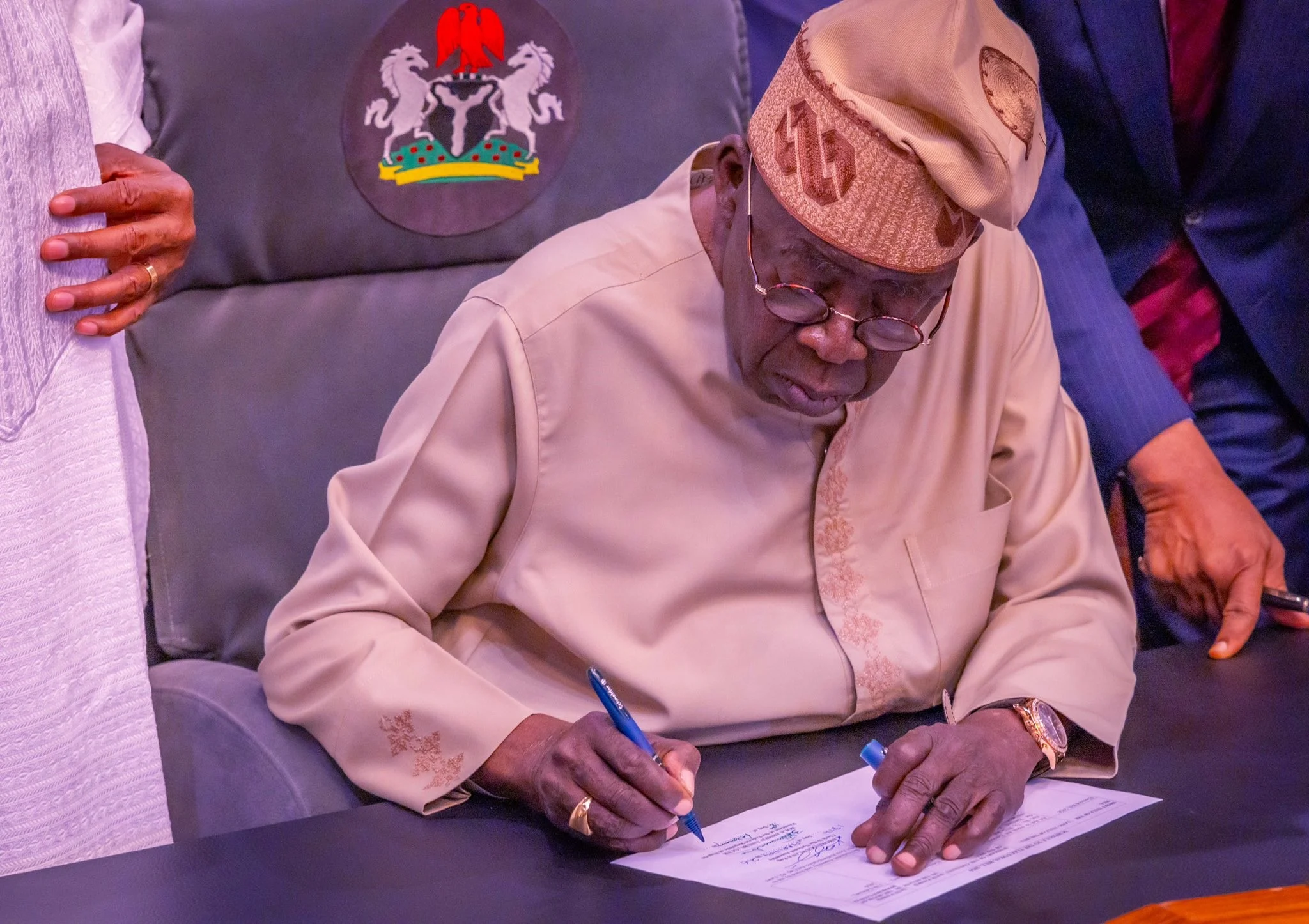
President Bola Tinubu signed the amended Electoral Act into law around 5 p.m. on Wednesday at the Aso Rock Presidential Villa in Abuja, in the presence of senior officials of the National Assembly. The signing came less than 24 hours after both chambers of the legislature passed the bill, a speed that has fueled allegations of a coordinated and hurried process.
During the signing ceremony, the President reportedly raised concerns about the country’s broadband infrastructure and its technical capacity to support real-time electronic transmission of election results nationwide. He suggested that existing technological limitations could pose challenges to the full implementation of electronic processes in future elections.
However, opposition parties rejected the justification, insisting that the amendment weakens, rather than strengthens, the electoral framework. The Peoples Democratic Party accused the ruling All Progressives Congress of pushing through the legislation out of fear of losing power in the next electoral cycle. The party described the President’s assent as a troubling signal that partisan interests had prevailed over national democratic aspirations.
According to the opposition, the swift approval of the bill, despite objections from various segments of society, represents what they termed a “dark moment” for the country’s democracy. They argued that the amendment could erode public confidence in the electoral system and diminish trust in democratic institutions at a critical period in Nigeria’s political history.
The amendment has generated intense debate, particularly over provisions relating to the electronic transmission of results. Following the controversies that trailed the 2023 general elections, many stakeholders had demanded stronger legal backing for real-time electronic transmission as a safeguard against result manipulation. Critics contend that the new provisions fall short of public expectations and may introduce ambiguities capable of being exploited.
The timing of the presidential assent has further heightened tensions, coming shortly after the Independent National Electoral Commission unveiled the timetable for the 2027 general elections. Opposition figures and advocacy groups argue that altering key aspects of the electoral law so close to the electoral cycle risks creating uncertainty and giving undue advantage to the incumbent administration.
Prominent civic voices have also weighed in. Some election reform advocates described the amendment as a missed opportunity to implement comprehensive and transformative changes that could address longstanding weaknesses in Nigeria’s electoral process. They maintain that instead of strengthening institutional independence and enhancing transparency, the revised law may introduce vulnerabilities that compromise the integrity of elections.
Others have warned that the changes could amount to a formalisation of practices that critics believe have previously undermined electoral outcomes. They argue that the country had made incremental progress toward greater transparency through technological innovations, and that the amendment could reverse those gains.
Not all reactions have been entirely dismissive, however. A few civil society leaders adopted a more measured tone, acknowledging imperfections in the new law while emphasising the need for continued advocacy. They suggested that while the amendment may not meet the expectations of all stakeholders, engagement and sustained pressure for further reforms remain essential to strengthening Nigeria’s democracy.
As debates continue, many Nigerians are watching closely to see how the amended Electoral Act will be implemented and whether it will enhance or diminish confidence in the 2027 general elections. The controversy underscores the enduring struggle over electoral reforms in the country and highlights the critical importance of transparency, inclusiveness, and trust in sustaining democratic governance.




Post comments (0)