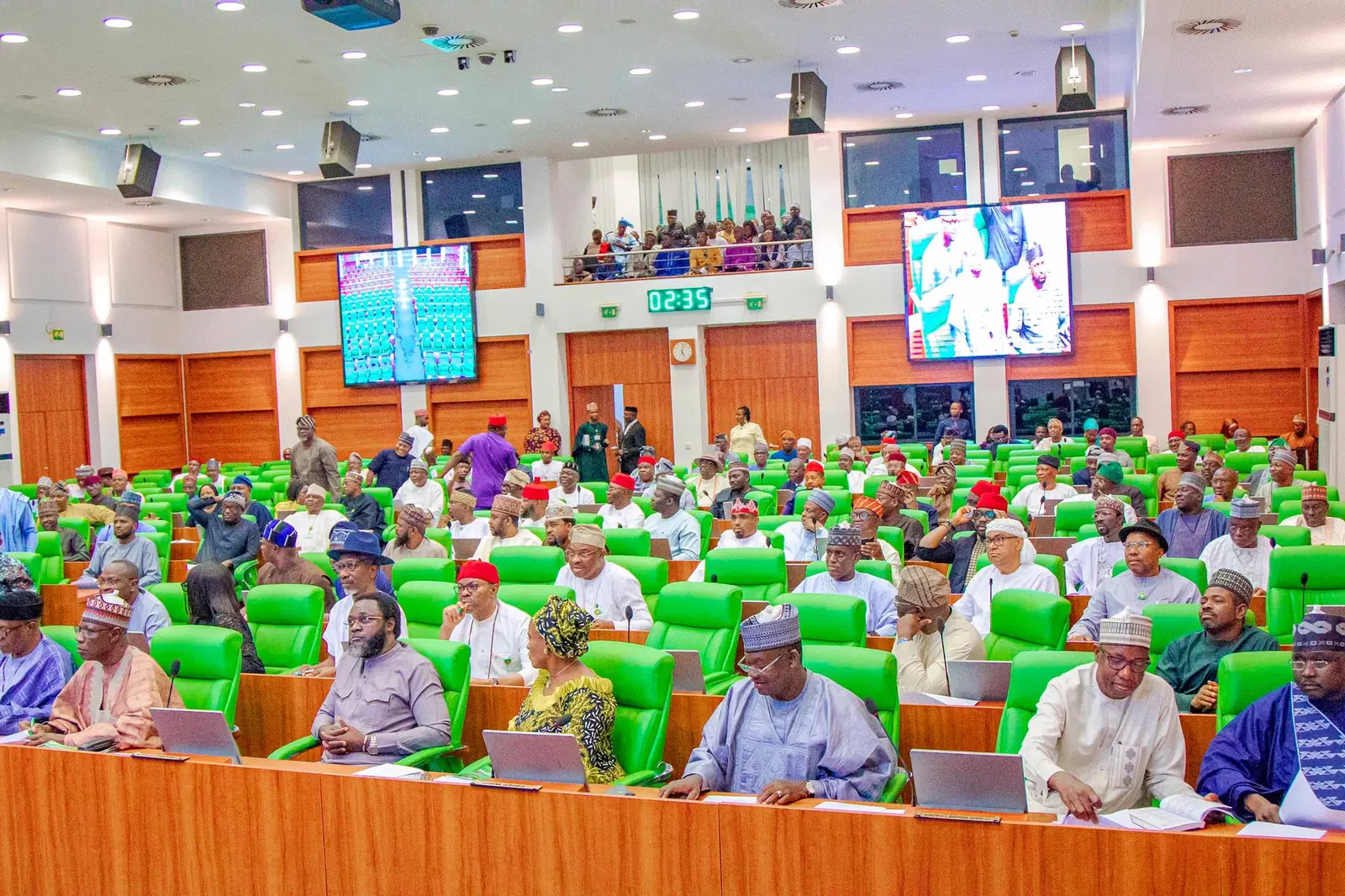
The planned meeting of the Conference Committee made up of members from the Senate and the House of Representatives to harmonise the Electoral Act (Repeal and Re-enactment) Bill, 2026, was abruptly shifted to late night after an earlier session failed to hold as scheduled. The delay followed the inability of members of the House of Representatives on the committee to formally convene and deliberate on key areas of disagreement ahead of plenary consideration.
The development comes at a critical time, with Nigeria exactly 368 days away from the February 20, 2027 general elections. Attention is increasingly focused on the legal framework that will guide the polls, particularly provisions relating to electronic transmission of election results. Political stakeholders, civil society groups and observers have continued to press for clear, enforceable mechanisms that would guarantee transparency and eliminate ambiguities that generated disputes during previous elections.
The conference committee, which was constituted to reconcile differences between the Senate and House versions of the bill, had initially scheduled its meeting for 11:00 a.m. However, proceedings could not commence as planned due to the absence of several key members, especially from the House of Representatives. Senators who arrived at the designated venue reportedly waited for some time in anticipation of their counterparts, but no House members were present at the scheduled hour.
Among those present were the chairmen of the respective electoral committees in both chambers — Simon Lalong, who heads the Senate Committee on Electoral Matters, and Adebayo Balogun, chairman of the House Committee on Electoral Matters. Despite their presence, the absence of a quorum from the House side prevented formal deliberations from taking place.
After waiting for several minutes without progress, the senators reportedly moved to Senator Lalong’s office for consultations. Roughly 20 minutes later, it was agreed that the meeting would be rescheduled for 3:00 p.m. in hopes that the full complement of members would be available by then.
However, when the committee reconvened in the afternoon, the situation remained largely unchanged. By 3:30 p.m., a number of senators, including Jibrin Isah, Abba Moro, and Tahir Monguno, were seated and prepared for discussions. Yet, once again, there was no significant representation from the House of Representatives.
At about 4:00 p.m., Senator Lalong arrived at the venue and was later joined by Balogun. The two leaders held a brief closed-door meeting lasting approximately 10 minutes. Following their private discussions, members began to disperse, effectively bringing the day’s efforts to an inconclusive end. No harmonised position was reached, and no formal resolutions were announced.
The failure to convene and deliberate as planned has raised concerns about the timeline for finalising the Electoral Act amendments. Conference committees play a critical role in Nigeria’s legislative process by resolving discrepancies between versions of a bill passed by the two chambers. Without agreement at this stage, the proposed amendments cannot proceed to final passage and presidential assent.
The Electoral Act (Repeal and Re-enactment) Bill, 2026, is widely regarded as pivotal in shaping the credibility of the 2027 general elections. Of particular interest are provisions relating to the electronic transmission of results, collation procedures, and the legal status of digital platforms used by the Independent National Electoral Commission. Many stakeholders are calling for explicit language that would remove ambiguity and prevent conflicting interpretations in the event of disputes.
With less than a year to the next general elections, pressure is mounting on lawmakers to expedite the harmonisation process. Electoral preparations typically require significant lead time, including procurement of materials, deployment of technology, and voter education. Delays in clarifying the legal framework could complicate planning and implementation by the electoral body.
As the National Assembly moves closer to plenary sessions where final decisions are expected, observers will be watching closely to see whether the conference committee can reconvene promptly and bridge the gaps between both chambers. The ability of lawmakers to resolve their differences and produce a unified bill will be crucial in strengthening public confidence in the electoral process ahead of 2027.



Post comments (0)