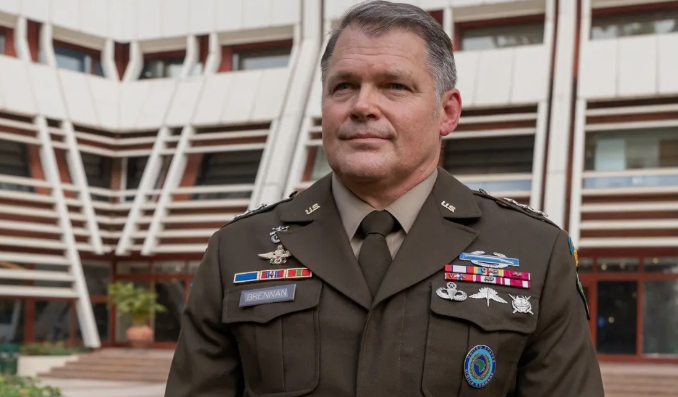
The U.S. military is increasing its equipment and intelligence support for Nigeria as part of a broader strategy to combat Islamic State-linked militias in Africa, according to the deputy commander of U.S. Africa Command (AFRICOM).
Lieutenant General John Brennan stated that this enhanced cooperation with Nigeria reflects Washington’s growing commitment to working closely with African armed forces to combat extremist groups, including those with ties to the Islamic State.
He explained that the U.S. military is taking a more proactive approach to the IS threat on the continent while prioritizing intelligence sharing, operational support, and equipment provision to partner countries with fewer restrictions.
This renewed cooperation follows a recent U.S.-Nigerian security meeting held in Abuja and comes just weeks after U.S. airstrikes on Islamic State-linked targets in northwestern Nigeria. US officials stated that future support would focus on intelligence assistance to facilitate Nigerian air operations in the affected areas, particularly in the northeast, where Boko Haram and its splinter group, the Islamic State of West Africa (ISWAP), have been waging an insurgency since 2009.
Brennan described ISWAP as the most concerning extremist group in Nigeria and emphasized that US intelligence support would cover multiple regions facing jihadist threats and would not be limited to a single religious group.
Diplomatic Sensibilities
The enhanced military cooperation comes amid diplomatic tensions stemming from Washington’s pressure regarding the violence in Nigeria. While some US officials frame the crisis in religious terms, Nigerian authorities and independent analysts stress that the country’s security challenges are complex and rooted in interconnected factors such as insurgency, gang activity, poverty, and weak state control in rural areas.
Nigeria, Africa’s most populous country, is almost evenly divided into a predominantly Muslim north and a predominantly Christian south. Religious identity remains a sensitive issue, marked by a long history of sectarian tensions.
US officials emphasize that the exchange of intelligence and military support primarily serves the purpose of combating terrorism and improving security in the affected regions.
Expanded Engagement in the Sahel
Beyond Nigeria, despite strained diplomatic relations resulting from a series of coups between 2020 and 2023, the United States has maintained informal contacts and limited intelligence cooperation with the armed forces of military juntas in the Sahel region, including Burkina Faso, Mali, and Niger.
Mr. Brennan stated that information was shared with some armed forces in the Sahel to target key terrorist groups, although formal security cooperation has been reduced.
He also ruled out any plans to establish new permanent US military bases in West Africa, emphasizing that Washington prioritizes the rapid deployment of capabilities where they are needed, rather than maintaining permanent facilities.
Analysts point out that while increased air and reconnaissance support can weaken militant networks, long-term stability depends on addressing deeper issues such as poverty, poor governance, and insecurity in rural communities.
For now, the United States remains committed to strengthening Nigeria’s capacity to combat extremist threats while adjusting its military presence in the region.


Post comments (0)