The Lagos State House of Assembly has passed the 4.4 trillion naira budget proposal for the 2026 fiscal year following the adoption of the corresponding report by the House Committee on Economic Planning and Budget.
Committee Chairman Sa’ah Olumoh presented the report to the plenary session, outlining the assumptions, projections, and structure of the 2026 budget, titled “Budget for Shared Prosperity.”
According to the report, the 2026 budget is the third fiscal cycle of the current administration and the last new fiscal cycle of Governor Babajide Sanwo-Olu’s second term. It aligns with the state’s development agenda, which is based on four strategic pillars: people-centered development, modern and adaptable infrastructure, a thriving economy for a 21st-century megacity, and effective governance.
Committee Chairman Sa’ah Olumoh presented the report to the plenary session, outlining the assumptions, projections, and structure of the 2026 budget, titled “Budget for Shared Prosperity.” Olumoh explained that the fiscal framework was based on key macroeconomic assumptions, including a reference exchange rate of 1,512 Naira to the dollar, an inflation rate of 14.7%, oil production of 2.06 million barrels per day, and a reference oil price of $64 per barrel.
The committee also reviewed the implementation of the 2025 budget and reported a cumulative implementation rate of 79% (as of November 2025). Capital expenditures reached 75%, current expenditures 87%, and total revenues 79%.
For the 2026 fiscal year, the approved budget amounts to approximately 4.4 trillion naira, of which 2.052 trillion naira are for current expenditures and 2.185 trillion naira are for capital expenditures. The high proportion of capital expenditures reflects the state government’s focus on infrastructure development.
The budget includes personnel costs, overhead costs, service costs, and debt repayment. The projected deficit is approximately 243 billion naira and will be covered by approved deficit financing options.
During the deliberations, parliamentarians welcomed the budget, describing it as realistic and growth-oriented. It was announced that an additional 171 billion Naira was added to the budget as part of the review.
The members of the Assembly emphasized the importance of fiscal reforms, prudent debt reduction, and effective implementation, noting that these measures would strengthen the nation’s financial position.
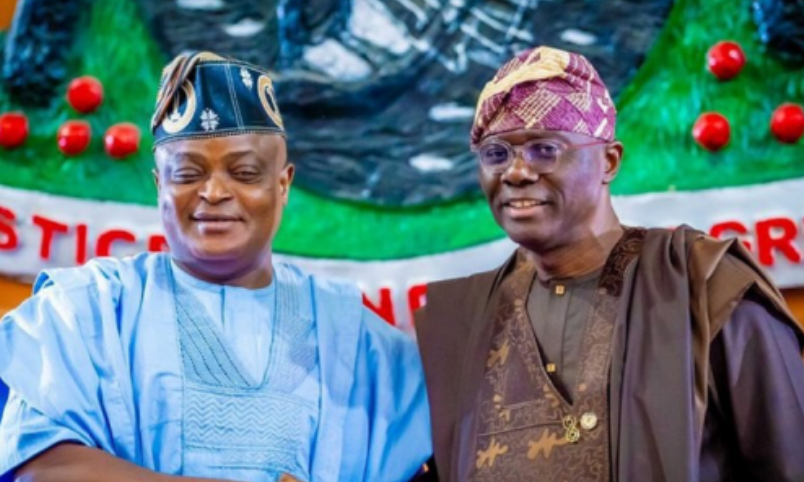
Following deliberations, the Assembly adopted the committee’s report, proceeded to its third reading, and passed the 2026 Budget Act.
Governor Sanwo-Olu had already presented the Assembly with an expenditure plan of 4.237 trillion naira on November 25, 2025. He explained that the budget aimed to accelerate economic growth, deepen infrastructure development, and maintain fiscal discipline. He stated that the budget projected total revenues of approximately 3.99 trillion naira, of which 3.12 trillion naira would come from domestic revenues and 874 billion naira from federal allocations, with a deficit financing plan of approximately 243.3 billion naira.



Post comments (0)