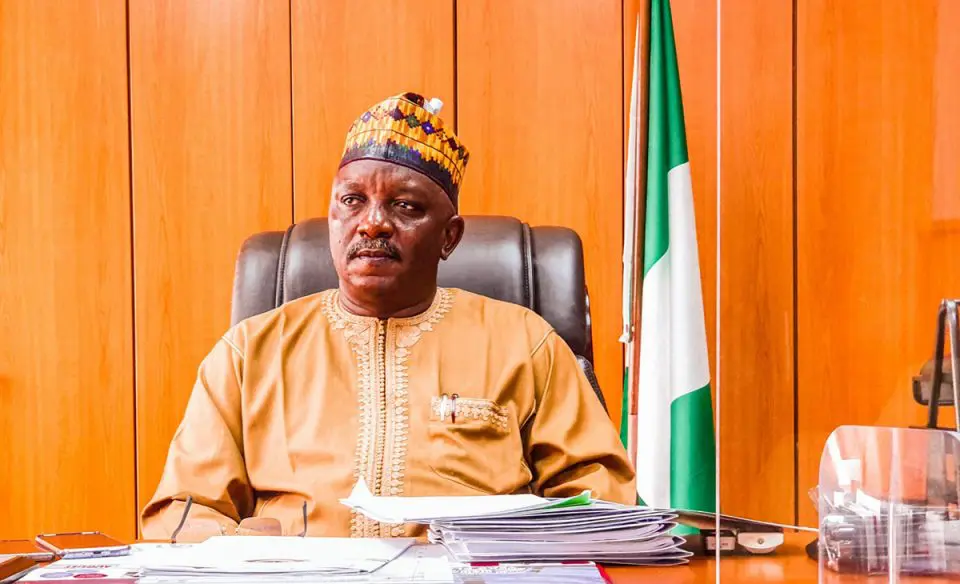
Justice James Omotosho of the Federal High Court sitting in Maitama, Abuja, on Thursday declined an application by the defence in the ongoing trial of former Minister of Power, Saleh Mamman, to call a prosecution witness as part of its case in the alleged N33.8 billion fraud charge.
At the resumed hearing, defence counsel, Femi Atteh, SAN, made an oral application seeking permission for Abdulkareem Ibrahim Ozi, who had earlier testified as Prosecution Witness Two (PW2), to give evidence for the defence. The senior lawyer told the court that the witness was present on subpoena and that his further testimony was necessary to clarify certain documents already tendered during the prosecution’s case.
Atteh argued that the witness, being the maker of specific documents admitted as exhibits, was in a position to shed more light on them in a manner that would assist the defence. According to him, there were exhibits — identified as PW B1, B2 and B3 — which required further clarification. He urged the court to allow the subpoenaed witness to enter the witness box and testify for the defence, maintaining that doing so would serve the interest of justice and ensure that all relevant issues were properly addressed before the court.
However, the prosecution opposed the application. Prosecution counsel, Rotimi Oyedepo, SAN, described the move as procedurally improper and inconsistent with established legal practice. He reminded the court that the witness had already testified for the prosecution on November 12, 2024, during which he tendered documents and was extensively cross-examined by the defence before being discharged.
Oyedepo contended that the defence had not specified the particular aspects of the exhibits that required further cross-examination or clarification. He also argued that the prosecution had provided all relevant documents in advance during the course of its case, thereby giving the defence ample opportunity to prepare and address any issues arising from them. Allowing the witness to be recalled in the manner proposed, he said, would amount to an abuse of court process and could lead to procedural irregularities.
In his ruling, Justice Omotosho held that the procedure adopted by the defence was unknown to law and inconsistent with established judicial practice. The judge observed that once a witness has testified, been cross-examined and discharged, such a witness cannot simply be called again to give fresh evidence without proper legal grounds.
The court noted that although a witness may, in certain circumstances, be recalled, the approach must comply strictly with laid-down rules of court and legal procedure. Justice Omotosho emphasised that the defence was not entirely foreclosed from engaging the witness further but clarified that any such move must be done in accordance with due process.
He stated that while the defence could seek to recall the witness for purposes of cross-examination where legally justified, it could not rely on a subpoena in the manner suggested to have the witness testify afresh as part of its case. The judge described the application as strange and not recognised within the framework of Nigerian jurisprudence.
Consequently, Justice Omotosho discharged the witness from the witness box and directed that if the defence intended to make further use of him, it must file a formal written application on notice, setting out the legal basis for such a request. The court made it clear that an oral application would not suffice in the circumstances.
Following the ruling, defence counsel informed the court that it had closed its case.
The trial was subsequently adjourned until April 13, 2026, for the adoption of final written addresses, marking the next major step in the proceedings in the high-profile fraud case involving the former minister.





Post comments (0)