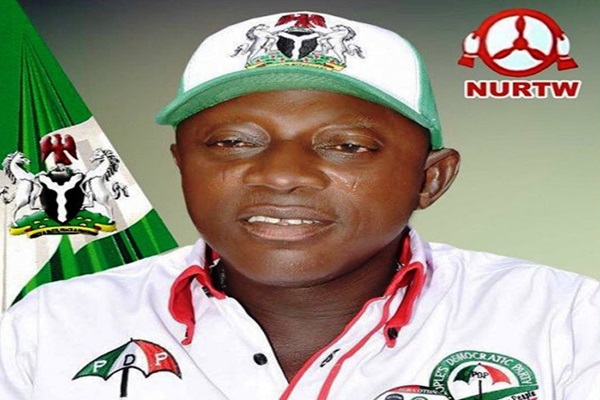
A former leader of the National Union of Road Transport Workers (NURTW), Mukaila Lamidi, also known as Auxiliary, has formally filed a motion seeking the recusal of the presiding judge in his ongoing trial, citing concerns over perceived bias and the need to ensure a fair and impartial hearing. The application, dated February 17, 2026, was submitted to the Ibadan Division of the Oyo State High Court and seeks an order disqualifying Justice Bayo Taiwo from continuing with Charge No: I/74C/2024, a case in which Lamidi is facing criminal allegations brought by the state.
In the motion, Lamidi’s legal team, led by his counsel Olalekan Ojo, relied on provisions in Section 36(4) of the 1999 Constitution (as amended) and the inherent jurisdiction of the court to argue for the judge’s disqualification. The defence team contended that Justice Taiwo had previously recused himself from the case on October 24, 2025, and returned the file to the Chief Judge for reassignment, and that it would be inconsistent and improper for the judge to revisit the matter after that initial recusal. They argued that maintaining judicial consistency in matters of recusal is essential to preserving the integrity of the trial and ensuring public confidence in the judicial process.
The motion further highlighted an incident that occurred on April 4, 2025, in which members of the prosecution team were reportedly observed meeting with Justice Taiwo before the commencement of court proceedings, in the absence of the defence team. While the judge later explained that the prosecutors were invited to collect the court’s 2025 diary, Lamidi’s lawyers argued that such an occurrence raised serious concerns about impartiality. They stated that even the appearance of partiality could undermine public confidence in the trial and in the administration of justice more broadly.
Citing the principle that “justice must not only be done but must be manifestly seen to be done,” the motion referenced established Supreme Court rulings and legal precedents emphasizing the importance of fairness and transparency in judicial proceedings. The legal team also drew attention to Rule 2 of the Code of Conduct for Judicial Officers 2016, which obligates judges to avoid situations that could reasonably give rise to suspicion of favoritism, partiality, or bias. The defence contended that adherence to this standard is essential not only for the protection of the accused’s rights but also for maintaining public trust in the judicial system.
Lamidi’s counsel urged the court to consider the motion seriously, framing it as a necessary step to safeguard both the fairness of the trial and the integrity of the judiciary. They emphasised that an impartial bench is critical to ensuring that the trial is conducted in accordance with the rule of law, and that any perception of bias could have long-lasting implications for public confidence in the judicial process.
As of the time of the filing, no official response had been issued by Justice Taiwo, the Oyo State judiciary, or the prosecuting authorities. The defence motion is expected to be considered by the court in due course, with a formal hearing date to be determined. Meanwhile, the trial itself has been adjourned to February 19, 2026, to allow time for the court to review and address the recusal request.
The motion underscores broader concerns within legal circles about ensuring transparency, accountability, and fairness in high-profile trials. Observers note that recusal requests, particularly in cases with public attention, serve an important role in preventing conflicts of interest, preserving judicial integrity, and reinforcing the principle that justice must be not only administered but also perceived as impartial by the public. In Lamidi’s case, the outcome of this motion is likely to influence both the management of his trial and the broader perception of judicial independence in the state.




Post comments (0)