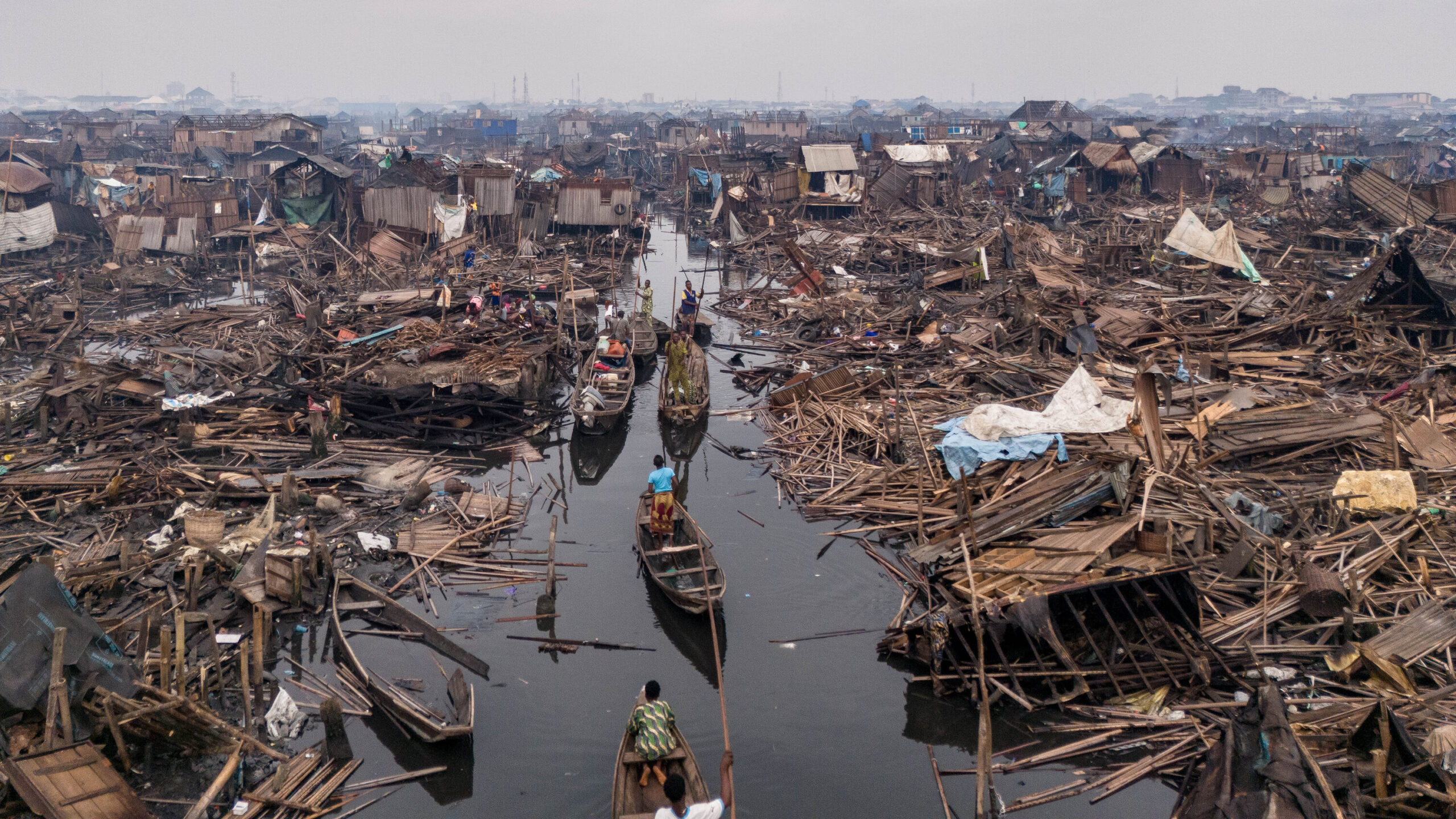
Makoko, Lagos’ historic floating fishing village, is in deep crisis following a demolition campaign by the Lagos State government. Thousands of residents are homeless and living in poverty.
Women, children, widows, and the elderly are now sleeping in dugout canoes under the open sky on the lagoon after entire rows of wooden houses and shops were destroyed. Broken planks, scattered household items, and destroyed fishing gear litter the once bustling waterfront district.
Makoko, often called Africa’s largest floating slum, is home to fishermen, traders, and artisans whose livelihoods depend entirely on the lagoon. For many residents, the demolitions have destroyed not only their homes but also their sole source of income.
The demolitions began secretly.
According to residents, the operation began secretly in December 2025 in some parts of the village and gradually spread to the heart of Makoko without any consultation or dialogue.
What began as isolated acts of destruction quickly spread, leaving families without shelter, food, or income. Fishing nets, boats, savings, household items, and small businesses were destroyed, plunging many households into extreme poverty overnight.
Destroyed Livelihoods
Before the destruction, residents lived from fishing, fish smoking, trade, and small home businesses. Today, many of these economic activities have disappeared.
Parents report that hunger has become a daily occurrence, and children often go to bed hungry. Several families report frequent childhood illnesses due to rain, cold nights, mosquitoes, and the poor living conditions.
No Shelter, No Help
The displaced report that they have received neither emergency shelters nor refugee camps or resettlement programs. During heavy rains, families are soaked. In the heat, they find no shade. At night, many sleep in wooden boats, clinging to their children to protect them from the cold and heat.
Some residents who sought refuge with relatives report being turned away because they lacked the money for food and other living expenses.
Impact on Children
The demolitions have also affected school operations. Many children have had to leave school because their families can no longer afford tuition, uniforms, and transportation. Teachers at neighboring schools confirm a sharp decline in attendance among students from Makoko since January.
Deaths and Trauma
Residents and civil society organizations report several deaths related to the demolitions, caused by stress, illness, displacement, and trauma. Families report elderly people collapsing from shock and others becoming ill after losing their homes and access to healthcare.
Although these allegations have not been officially confirmed, the emotional and psychological trauma in the community is evident.
Government Position
The Lagos State government maintains that the demolished buildings were located under high-voltage power lines and posed a serious risk to human life. Authorities emphasize that the operation was carried out in the interest of public safety and that the affected buildings were identified well in advance.
The state government also states that it is considering compensation measures for the affected residents.
However, many residents dispute this explanation, pointing out that many of the demolished houses and businesses were not located near high-voltage power lines. This raises questions about the scope and justification of the operation.
Political Support and Public Reaction
The Lagos State Legislature approved the demolition, deeming it necessary for safety, urban development, and public order. The legislators argued that removing the waterfront shacks was essential to prevent crime, environmental risks, and avoidable disasters.
This stance sparked outrage among residents and civil rights organizations. They perceived the decision as a refusal to listen to the affected communities and an inability to offer humane relocation solutions.
National Debate and Criticism
The demolition has triggered nationwide outrage. Public figures and civil society organizations condemned him.




Post comments (0)