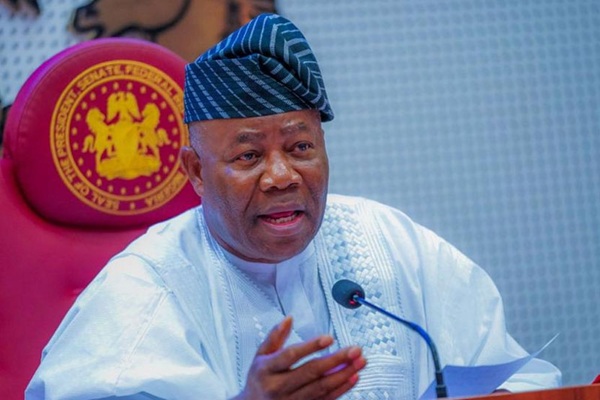
Senate President Godswill Akpabio has assured Nigerians that amendments to the Electoral Act will be concluded in time for the 2027 general election.
The assurance was given in response to concerns raised by AdvoKC Foundation, a civil society organisation, over delays in the consideration of the Electoral Bill 2025. Akpabio’s position was conveyed through his Special Adviser on Constitutional Matters, Dr. Monday Ubani (SAN).
Addressing journalists, Ubani said the Senate would take up the Electoral Bill immediately after resuming from its recess on January 27, expressing confidence that the legislative process would be completed swiftly.
According to him, the Senate leadership is working towards passing the Bill and securing presidential assent by the first week of February, noting that the timeline is critical because the Independent National Electoral Commission (INEC) is legally required to issue a Notice of Election at least one year before polling day.
“With the House of Representatives having already passed its version, the process is approaching its final stages,” Ubani said. “Once the Senate resumes, the Bill will be considered and passed.”
AdvoKC Foundation had earlier criticised the Senate for proceeding on recess despite the time-sensitive nature of the Electoral Bill, warning that failure to pass the amendment before INEC issues its Notice of Election would mean that the 2027 general election would be conducted under the existing 2022 Electoral Act.
The group argued that such an outcome could undermine key reforms, weaken INEC’s preparedness, and further erode public confidence in Nigeria’s electoral process.
Describing the Electoral Bill 2025 as one of the most comprehensive reform efforts in recent years, the foundation highlighted provisions such as early release of INEC funding, mandatory audited accounts, NIN-based voter registration, clearer election timelines, early voting, and expanded voting rights for inmates.
Ubani acknowledged that shortcomings in the 2022 Electoral Act became evident during the 2023 general election, particularly in election litigation and result management. He identified real-time electronic transmission of results as a critical reform, saying it would significantly reduce manipulation at collation centres and provide a reliable audit trail for judicial review.
He also explained that the proposed amendment seeks to prevent election petitions from being dismissed on technical grounds by allowing documentary evidence to be tendered by a single collation officer or legal representative, rather than requiring witnesses from every polling unit.
Welcoming the Senate’s assurance, AdvoKC Foundation said attention must now shift from promises to implementation. The group recalled that despite the importance of the Bill, the Senate deferred its consideration even after the committee report appeared on the Order Paper in December, before proceeding on recess.
The foundation urged the leadership of the 10th National Assembly to act without further delay, stressing that the credibility of Nigeria’s democracy depends on timely electoral reforms.
Ubani added that after the Bill’s passage, the Senate leadership plans to engage media and judiciary correspondents to ensure broad public understanding of the new electoral provisions.





Post comments (0)