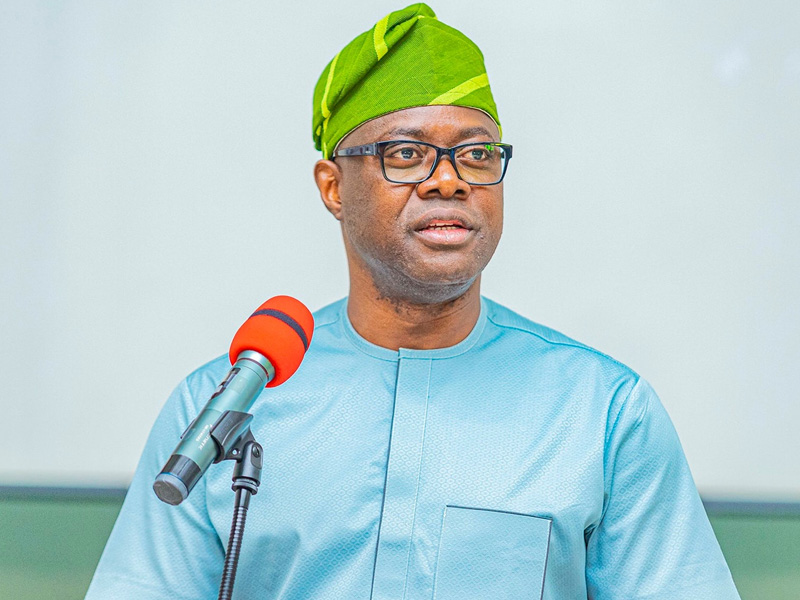
The governor of Oyo State, Seyi Makinde, re-established the Oyo State Council of Obas and Chiefs on Thursday after a 15-year break in continuity. The Olubadan of Ibadan, Oba Rashidi Ladoja, was appointed the council’s first chairman.
The inauguration took place at the House of Chiefs in the Parliament Building of the Secretariat in Ibadan. The Alaafin of Oyo, Oba Akeem Owoade, was notably absent.
During the event, Governor Makinde announced that the chairmanship of the council will rotate among the state’s three highest-ranking monarchs: the Olubadan of Ibadan, the Alaafin of Oyo, and the Soun of Ogbomosoland. Each monarch will serve a two-year term. According to the governor, this arrangement was decided upon after consulting with traditional leaders and aims to promote unity, harmony, and cooperation among the state’s traditional institutions. However, the Alaafin immediately rejected the governor’s claims. In a statement released by his press secretary, Bode Durojaye, the monarch clarified that there had been neither a meeting nor an agreement between him, the governor, and the other traditional leaders regarding the rotating presidency.
The statement emphasized that the Alaafin had neither discussed nor approved a rotation system at the head of the council with the governor. It further stated that the position of the Alaafin and the Oyo community within the State Council of Obas and Chiefs had already been communicated to the governor through a memorandum from the Oyo Council of Elders.
The inauguration took place amid rumors of discord between the Alaafin and the Olubadan after a video surfaced that apparently showed the two monarchs refusing to greet each other at a public event. In light of this speculation, Oba Ladoja rejected any allegations of conflict, calling the incident a misunderstanding that had been blown out of proportion on social media. The Olubadan explained his late arrival and his wish to take his seat discreetly without disrupting the ceremony. He emphasized that he had no intention of offending or showing disrespect to the Alaafin and assured everyone that there were no tensions between the traditional institutions.
At the inauguration, Governor Makinde highlighted the importance of reviving the council, noting that its last meeting had taken place in 2011. He explained that the absence of a functioning council for over a decade had weakened the role of traditional institutions in governance and community development.
In his address, Oba Ladoja called on the public to trust the council, describing the inauguration as the beginning of serious work, not just a one-off success. He reaffirmed that the council’s primary responsibility was to promote peace, security, and development in its territories, adding that the unity of its members would lead to the progress of the state. The Commissioner for Local Affairs and Chiefdoms, Ademola Ojo, also described the traditional chiefs as guardians of culture and social cohesion and expressed hope that the council would serve as a platform for constructive dialogue and partnership with the state government to promote peace, security and socio-economic development.



Post comments (0)