US President Donald Trump announced the imposition of 25 percent tariffs on goods from all countries that trade with Iran. This increases pressure on Tehran as a human rights organization reported that at least 648 people were killed in the crackdown on protests across the country.
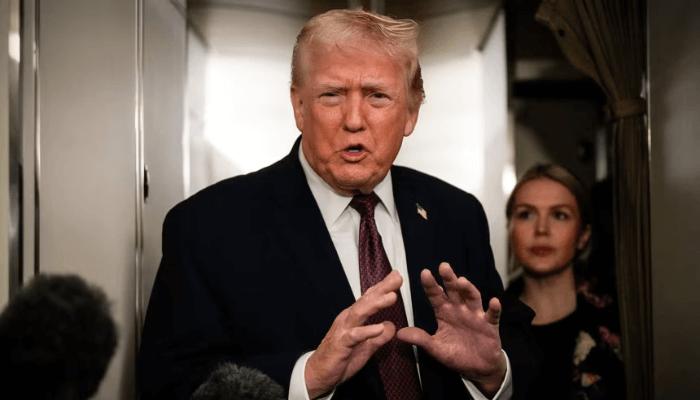
Trump made the announcement on social media on Monday, specifying that the new tariffs would take effect immediately and apply to Iran’s trading partners, including those that do business with the United States.
“This order is final and cannot be appealed,” Trump said, without specifying which countries would be affected.
According to data from Trading Economics, China, Turkey, the United Arab Emirates, and Iraq are Iran’s most important trading partners.
This measure follows more than two weeks of nationwide protests in Iran, which initially stemmed from economic demands but have evolved into one of the biggest challenges to the theocratic system since the 1979 Islamic Revolution.
Despite a near-total internet outage and the use of lethal force by security forces, protests continue in several cities. Iranian authorities blame foreign interference for the unrest and have organized pro-government counter-demonstrations.
The Norway-based human rights organization Iran Human Rights (IHR) confirmed the deaths of at least 648 people, including nine minors, during the protests. The organization warned that the actual death toll could be significantly higher; estimates range over 6,000. IHR also reported approximately 10,000 arrests.
“The international community has a duty to protect civilian protesters from the massacres perpetrated by the Islamic Republic,” said Mahmood Amiry-Moghaddam, director of IHR. He noted that the internet shutdown had made independent verification extremely difficult.
The White House stated that Donald Trump remained open to diplomatic talks but would also use military force if necessary.
On Monday, Iranian authorities attempted to regain control of the country by holding large pro-government rallies. Supreme Leader Ayatollah Ali Khamenei described the demonstrations as proof of the protest movement’s defeat and warned the United States against any interference.
In Tehran, high-ranking officials accused foreign powers of instigating the unrest. Parliament Speaker Mohammad Bagher Ghalibaf declared that Iran was fighting a “four-front war,” citing economic, psychological, military, and domestic political challenges as the reasons.
Meanwhile, Trump claimed that Iranian leaders had contacted him regarding negotiations. Iranian Foreign Minister Abbas Araghchi said that Tehran was not seeking war but was well prepared for it, while simultaneously calling for fair negotiations. He confirmed that indirect channels of communication still existed despite the lack of formal diplomatic relations.
The European Union expressed its support for the Iranian protesters and stated that it was considering further sanctions in response to the actions of the authorities. The European Parliament also imposed a travel ban on Iranian diplomats.
French President Emmanuel Macron condemned what he considered arbitrary state violence against Iranian citizens demanding respect for their rights.
Russia, a key ally of Tehran, criticized what it saw as attempts to interfere in Iran’s internal affairs.
Despite official pronouncements signaling a return to calm, tensions remain high in Iran as the authorities continue their efforts to suppress dissent.

Post comments (0)