The price of gasoline was raised only after the victory of the American President Donald Trump, confirming that Venezuela had lost millions of dollars in gasoline export to the United States, adding to the requests regarding the authorization of the world enforcement.
The two main gasoline benchmark indices are up 1% during the session and will be added to the evening’s entries. This came following Trump’s statement that Venezuela’s domestic authorities had transferred between 30 and 50 million barrels when he was deemed by the United States to have “sanctions-free, high quality gasoline.”
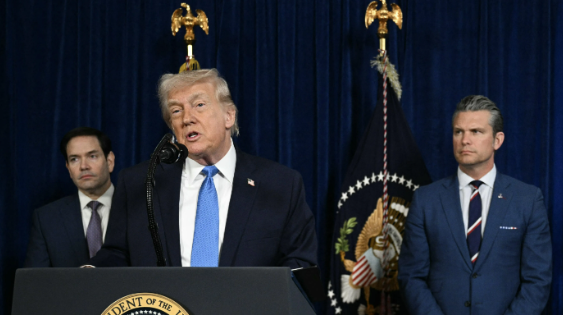
In his post on Truth Social, Trump explained that the gasoline would be sold at the price of the march and that the recipients would be controlled by the American government and benefit from the countries of Venezuela and the United States.
Crude oil prices have faced severe volatility in recent days due to rising geopolitical tensions surrounding Venezuela after Trump said Washington would take control of the country and demand full access to its oil resources.
Market analysts said the proposed deliveries could reduce the risk that Venezuela would be forced to cut production due to limited storage capacity, alleviating immediate supply problems. However, they warned that the overall outlook for oil prices remains trending downward.
The global crude oil market continues to come under pressure after OPEC and its allies reached an agreement to increase production and keep inventories well-filled. Although Venezuela has about a fifth of the world’s proven oil reserves, analysts have noted that a rapid increase in production would be limited by aging infrastructure, weak investment and ongoing political uncertainty.
At the same time, global stock markets were mixed after a strong start to the year that saw several major indices hit record highs, largely due to continued investor enthusiasm for artificial intelligence-related stocks.
In Asia, South Korea’s Kospi index extended gains, while markets in China, Australia, New Zealand, the Philippines and Indonesia also closed higher. In contrast, stocks in Hong Kong, Singapore, Taiwan and India fell. Japan’s Nikkei index fell sharply after China imposed stricter export controls on some Japan-bound products with potential military applications.
Despite growing geopolitical risks, analysts remain optimistic about the outlook for stocks, pointing to robust economic growth, strong corporate earnings and expectations of looser monetary and fiscal policy in the coming months.
At around 07:15 GMT, US benchmark West Texas Intermediate crude fell 1.6% to $56.24 a barrel, while Brent crude fell 1.2% to $60.00 a barrel.





Post comments (0)